

Introduction
The Sachin Tendulkar biography is the story of a boy from Mumbai who became the greatest run scorer in the history of cricket. For 24 years, from his debut as a 16 year old against Pakistan in 1989 to his farewell Test at Wankhede Stadium in 2013, Sachin Tendulkar carried the hopes of more than a billion people every time he walked to the crease. He finished his career as the only batsman to score 100 international centuries, the highest run scorer in both Test and one day cricket, and the winner of the 2011 Cricket World Cup.
Tendulkar is known as the Little Master and the Master Blaster, and those two nicknames capture the two sides of his game. He was a master of technique, with a straight bat and a perfect balance, and he was also a blaster who could destroy any bowling attack on his day. He played 200 Test matches, more than any other player, and 463 one day internationals, and he scored runs in every country and against every opponent.
This Sachin Tendulkar biography covers his early life in Mumbai, his debut at 16, his records, his World Cup journey, his awards and his life after cricket, with the numbers and dates that define one of the greatest sporting careers of all time.
Sachin Tendulkar Biography: Quick Facts
| Fact | Detail |
| Full name | Sachin Ramesh Tendulkar |
| Born | 24 April 1973, Bombay (now Mumbai), India |
| Nicknames | Little Master, Master Blaster |
| Role | Top order batter |
| International career | India, 1989 to 2013 |
| Test debut | 15 November 1989 v Pakistan, Karachi |
| ODI debut | 18 December 1989 v Pakistan |
| Last Test | 14 November 2013 v West Indies, Mumbai (200th Test) |
| Test runs | 15,921 in 200 Tests, average 53.78, 51 centuries |
| ODI runs | 18,426 in 463 ODIs, average 44.83, 49 centuries |
| International centuries | 100 (51 Tests, 49 ODIs) |
| World Cup | Winner 2011 |
| Top honours | Bharat Ratna (2014), Padma Vibhushan (2008), Khel Ratna (1997-98) |
Early Life in Mumbai
Sachin Ramesh Tendulkar was born on 24 April 1973 in Bombay, now Mumbai, into a middle class Maharashtrian family. His father, Ramesh Tendulkar, was a Marathi novelist and professor, and his mother, Rajni, worked in the insurance industry. He was named after the music director Sachin Dev Burman, his father’s favourite musician. He grew up in the suburb of Bandra, and his elder brother Ajit recognised his talent early and guided him towards cricket.
As a child, Sachin was energetic and restless, and his family decided to channel that energy into sport. At the age of 11, he joined the cricket academy of Ramakant Achrekar, one of the most respected coaches in Mumbai. Achrekar was a strict teacher who made his students practise for hours and who taught them the value of discipline and hard work. He would place a one rupee coin on the stumps and give it to any bowler who dismissed Sachin, a challenge that made Sachin determined never to get out cheaply.
At school, Sachin studied at Shardashram Vidyamandir, where he played with Vinod Kambli, another talented young cricketer. Together, they created one of the most famous records in school cricket, a partnership of 664 runs in a Harris Shield match in 1988. Sachin scored 326 not out in that innings, and the partnership is still talked about in Mumbai cricket circles today. It was the first sign that this young boy was not an ordinary talent.
Ranji Trophy Debut and the Road to India
Sachin made his Ranji Trophy debut for Mumbai in 1988 at the age of 15, and he scored a century on debut against Gujarat, becoming the youngest Indian to do so at that time. He followed it with a century in his first match in the Irani Cup and in the Duleep Trophy, a run of debut centuries that marked him out as a special player. Selectors could not ignore him, and within a year he was picked for the Indian team to tour Pakistan.
His rise was fast, but it was built on years of hard work in the nets of Shivaji Park in Mumbai, where he practised in all weather and against bowlers much older than him. Achrekar’s training had taught him to play the ball late, to keep his head still, and to respect good bowling while punishing bad bowling. These habits stayed with him for his whole career and are the reason his technique looked so complete even when he was a teenager.
Test Debut at 16 Against Pakistan
Sachin Tendulkar made his Test debut on 15 November 1989 against Pakistan in Karachi, at the age of 16 years and 205 days, one of the youngest debutants in Test history. He faced a Pakistan attack that included Wasim Akram, Waqar Younis and Imran Khan, one of the most feared bowling attacks in the world. He scored 15 runs in his first innings, and he was hit on the nose by a bouncer from Waqar Younis in the fourth Test at Sialkot, but he refused to leave the field and batted on with a bleeding nose.
That tour showed the world that Sachin was not just a talented boy but a fighter. He scored his first Test fifty in Faisalabad and finished the series with 215 runs at an average of 35.83. He made his ODI debut on 18 December 1989, also against Pakistan, and although he was dismissed for a duck in that first match, he soon became a regular in both formats.
His first Test century came in August 1990 against England at Old Trafford in Manchester, when he was 17 years old. He scored 119 not out and saved the match for India, becoming the second youngest player to score a Test century. It was the first of 51 Test centuries, and it announced to the world that a new great had arrived.
The Rise to Stardom in the 1990s
The 1990s were the decade when Sachin Tendulkar became a global star. He scored centuries in Australia, South Africa and England, and he became the mainstay of the Indian batting line up. In 1998, he had one of the greatest years of his career, scoring 1,894 ODI runs in a calendar year, including two centuries against Australia in Sharjah that are still remembered as the Desert Storm innings. In the first of those matches, he scored 143 runs in a sandstorm to take India into the final, and in the final he scored 134 to win the tournament.
During this period, Sachin also became a cultural icon in India. When he batted, streets emptied, offices stopped work, and the whole country watched. His face was on every advertisement, and his name was known to people who had never watched a cricket match. He carried this pressure with grace, and he rarely showed frustration in public, even when India lost.
Records That May Never Be Broken
The numbers in the Sachin Tendulkar biography are unlike those of any other cricketer. He is the only batsman to score 100 international centuries, with 51 in Tests and 49 in one day internationals. He scored 34,347 international runs in total, more than 30,000 runs in a career that spanned 24 years. He is the highest run scorer in both Test cricket, with 15,921 runs in 200 Tests, and in one day cricket, with 18,426 runs in 463 ODIs.
In 2010, at the age of 37, Sachin became the first batsman to score a double century in one day international cricket, with 200 not out against South Africa in Gwalior. It was a record that many thought would never be broken, and it showed that even after more than 20 years in international cricket, he could still do something that no one had done before.
The 2011 World Cup Win
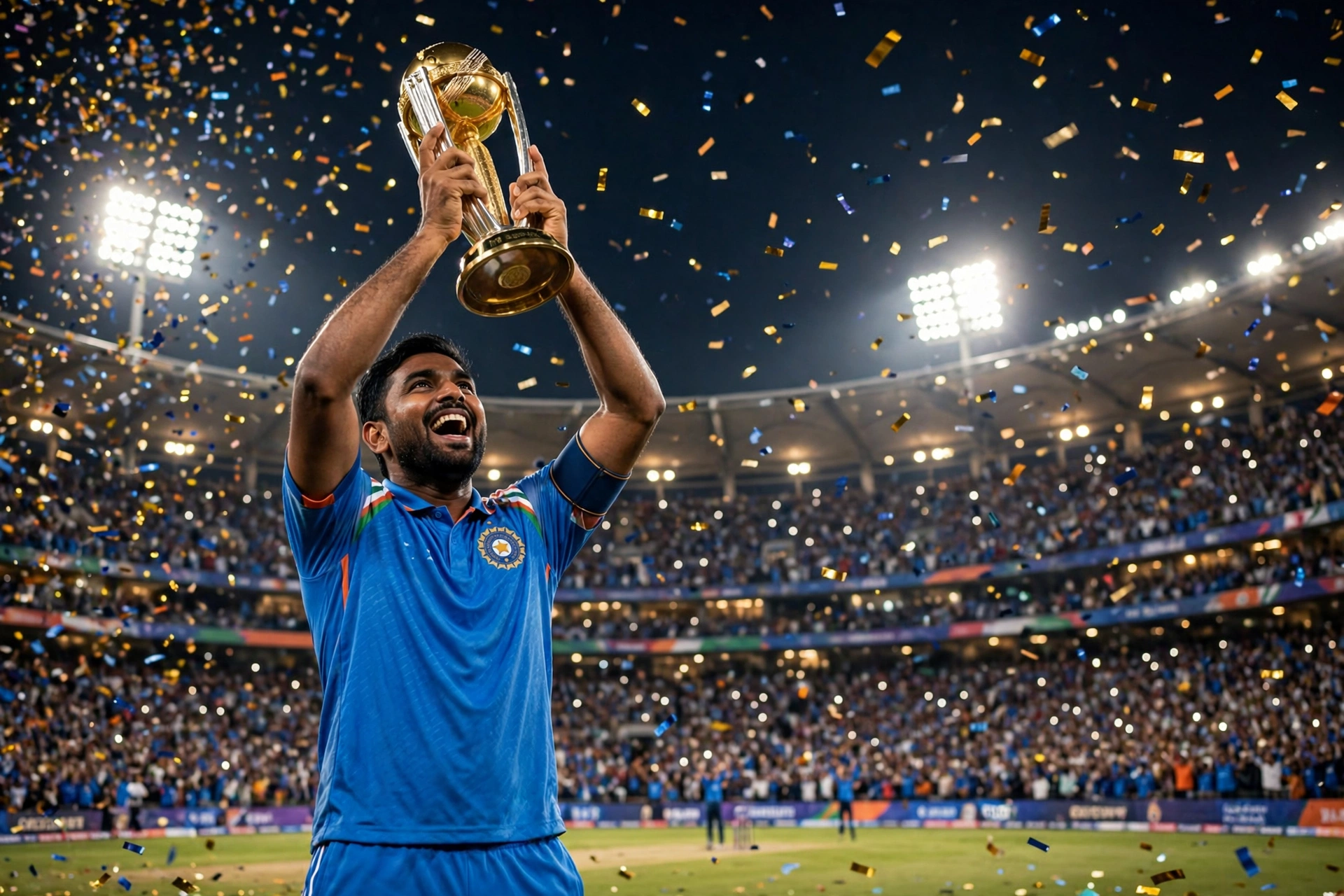
The 2011 Cricket World Cup was the most emotional chapter of Sachin Tendulkar’s career. He had played in five World Cups before and had come close in 2003, when India reached the final and lost to Australia. In 2011, the World Cup was played in India, Sri Lanka and Bangladesh, and the final was at Wankhede Stadium in Mumbai, Sachin’s home ground.
Sachin scored two centuries in the tournament and finished as India’s highest run scorer. In the final against Sri Lanka on 2 April 2011, India chased 275 to win, and although Sachin was dismissed for 18, his teammates carried India to victory. When the winning runs were hit, Sachin’s teammates lifted him on their shoulders and carried him around the ground. He later said that it was the proudest moment of his life, and that winning the World Cup for India was the one dream he had carried since he was a boy.
The image of Sachin being carried around Wankhede Stadium is one of the most famous in Indian sport. It showed a team that had won the World Cup for its greatest player, and a player who had finally achieved the one prize that had eluded him for 22 years.

IPL Career with Mumbai Indians
After his international career, Sachin played in the Indian Premier League for Mumbai Indians, the team from his home city. He played 78 IPL matches for Mumbai Indians and scored 2,334 runs, including one century. He was the captain of the team in the early years and later became a mentor, guiding young players and helping to build the team into one of the most successful in the IPL.
Retirement and Farewell at Wankhede
Sachin Tendulkar retired from one day international cricket on 23 December 2012, and from Test cricket in November 2013, after his 200th Test match against the West Indies at Wankhede Stadium in Mumbai. The farewell Test was a national event, with tickets selling out in minutes and the whole country watching his final innings. He scored 74 in his last Test innings, and when he was dismissed, the crowd gave him a standing ovation that lasted for minutes.
His farewell speech at Wankhede is remembered for its emotion and its gratitude. He thanked his family, his coaches, his teammates and the fans, and he said that the sound of the crowd chanting his name would stay with him for the rest of his life. He was carried around the ground by his teammates, and he touched the pitch with his hands before leaving, a gesture that moved millions of people.
Awards and Honours
Sachin Tendulkar has received more awards than any other Indian sportsperson. He was given the Arjuna Award in 1994, the Khel Ratna in 1997-98, the Padma Shri in 1999, and the Padma Vibhushan in 2008. In 2014, he became the first sportsperson to receive the Bharat Ratna, India’s highest civilian honour, and the youngest recipient of the award. He was also made an Honorary Member of the Order of Australia, a rare honour for a foreign sportsperson.
He was ranked by Wisden in 2002 as the second greatest Test batsman of all time, behind Don Bradman, and the second greatest ODI batsman of all time, behind Viv Richards. These rankings, made halfway through his career, show how highly he was regarded even before he completed his records. He has also been named in the ICC Hall of Fame, and his name is now part of the history of the game.
Life After Cricket
After retirement, Sachin Tendulkar has remained active in cricket and in public life. He served as a Member of Parliament in the Rajya Sabha from 2012 to 2018, nominated by the President of India. He has worked on initiatives to promote sport and education, and he has supported causes related to health and children. He is a mentor for Mumbai Indians and is often seen at matches, guiding young players and sharing his experience.
Sachin is married to Anjali Tendulkar, a paediatrician, and they have two children, Sara and Arjun. Arjun Tendulkar has followed his father into cricket and plays for Mumbai Indians and Goa in domestic cricket. Sachin has said that he wants his children to find their own paths, and he has supported Arjun’s career while keeping him away from the pressure that he himself faced.
Frequently Asked Questions
When was Sachin Tendulkar born?
Sachin Tendulkar was born on 24 April 1973 in Bombay, now Mumbai, India. His full name is Sachin Ramesh Tendulkar.
How many centuries did Sachin Tendulkar score?
Sachin Tendulkar scored 100 international centuries, with 51 in Test cricket and 49 in one day internationals. He is the only batsman in history to reach 100 international centuries.
When did Sachin Tendulkar retire?
Sachin Tendulkar retired from one day internationals in December 2012 and from Test cricket in November 2013, after his 200th Test match against the West Indies at Wankhede Stadium in Mumbai.
Did Sachin Tendulkar win the World Cup?
Yes, Sachin Tendulkar won the Cricket World Cup with India in 2011. India beat Sri Lanka in the final at Wankhede Stadium in Mumbai on 2 April 2011.
What is Sachin Tendulkar’s highest Test score?
Sachin Tendulkar’s highest Test score is 248 not out, scored against Bangladesh in Dhaka in 2004. His highest ODI score is 200 not out against South Africa in Gwalior in 2010.
What awards has Sachin Tendulkar won?
Sachin Tendulkar won the Arjuna Award in 1994, the Khel Ratna in 1997-98, the Padma Shri in 1999 and the Padma Vibhushan in 2008. In 2014 he received the Bharat Ratna, India’s highest civilian honour, as the first sportsperson and the youngest recipient.
Conclusion
The Sachin Tendulkar biography is the story of a 16 year old who faced the fastest bowlers in the world and never backed down, and who went on to score more runs and more centuries than any other batsman in history. From his debut in Karachi in 1989 to his farewell at Wankhede in 2013, he gave India 24 years of joy, pride and unforgettable moments, crowned by the 2011 World Cup win at his home ground.
His records may one day be challenged, but his place in the hearts of Indian fans is secure. He was not only a great batsman but a great ambassador for the game, a humble superstar who carried the hopes of a nation with grace. For young cricketers in India, the Sachin Tendulkar biography remains the ultimate guide to what hard work, discipline and love for the game can achieve.
