

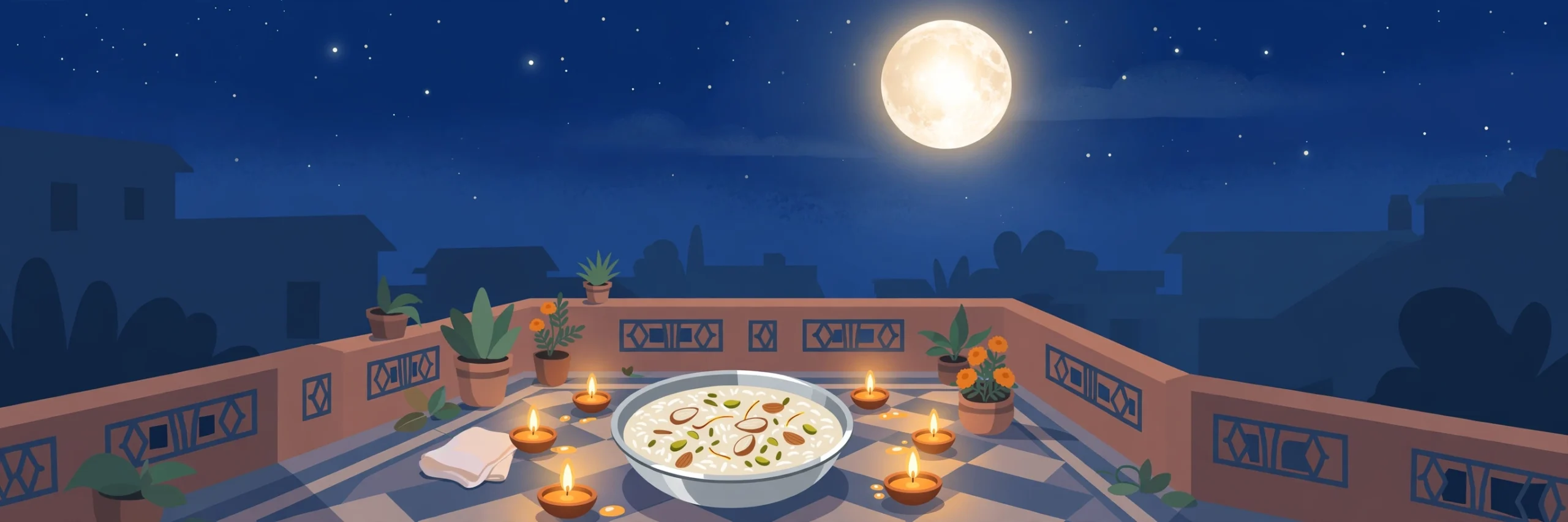
Sharad Purnima 2026 is being celebrated today, Sunday, 25 October. It is the full moon night of the Hindu month of Ashwin, and it holds a special place in the festive calendar because it is believed to be the only night of the year when the moon shines with all sixteen of its kalas, or divine phases. Known also as Kojagari Purnima, Raas Purnima and Kaumudi Vrat, the night is dedicated to Goddess Lakshmi, Lord Vishnu, Lord Krishna and Chandra Dev, the Moon God.
The most loved tradition of the night is the moonlight kheer. Families prepare rice kheer, place it under the open sky in the moonlight, and eat it as prasad the next morning, believing that the moon’s rays fill it with nectar. Because the festival falls tonight, this guide is written as a practical plan: the exact timings, the step-by-step puja, the kheer recipe, how different regions celebrate, and the small safety points that keep the night joyful.
Sharad Purnima arrives in the heart of the festive season, between Navratri and Diwali. Diwali 2026 falls on Sunday, 8 November, two weeks from today, so tonight’s moonlit puja is a beautiful opening to the fortnight of lights ahead. Our Diwali guide here:
Sharad Purnima 2026 date and timings
The Purnima tithi began at 11:55 AM on Sunday, 25 October and ends at 9:41 AM on Monday, 26 October. Because the night of the full moon falls on 25 October, the main festival is celebrated tonight.
- Sharad Purnima: Sunday, 25 October 2026.
- Purnima tithi begins: 25 October, 11:55 AM.
- Purnima tithi ends: 26 October, 9:41 AM.
- Moonrise: around 5:00 PM in Delhi, with small variations by city, so check your local panchang.
- Nishita muhurat for Lakshmi Puja: 11:40 PM on 25 October to 12:31 AM on 26 October.
The evening plan is simple. Offer water to the moon after moonrise, worship Goddess Lakshmi and Lord Vishnu, and keep the kheer out under the sky through the night. Many families stay awake, sing bhajans and hold a jagaran, because tradition says Goddess Lakshmi descends to earth on this night and asks, “Ko jagarti”, meaning “Who is awake”, blessing those who remain awake in devotion.
Why the moon matters tonight: sixteen kalas and amrit
In Hindu tradition, every human quality is associated with a kala, a phase of the moon, and the combination of all sixteen creates a complete personality. Lord Krishna is believed to have been born with all sixteen kalas, which is why he is called the complete incarnation of Lord Vishnu. On Sharad Purnima, devotees believe the moon itself manifests all sixteen kalas, and that its rays drip nectar, called amrit, with healing and nourishing properties.
There is also a gentle, observable truth behind the poetry. A clear autumn full moon after the monsoon is unusually bright, the air is cooler, and families gather outdoors together. Whether you approach the night through faith, through science, or through both, it is a night made for slowing down and looking up. For more on the discoveries that shape how we understand the world, see our roundup here:
Step-by-step Sharad Purnima puja for tonight
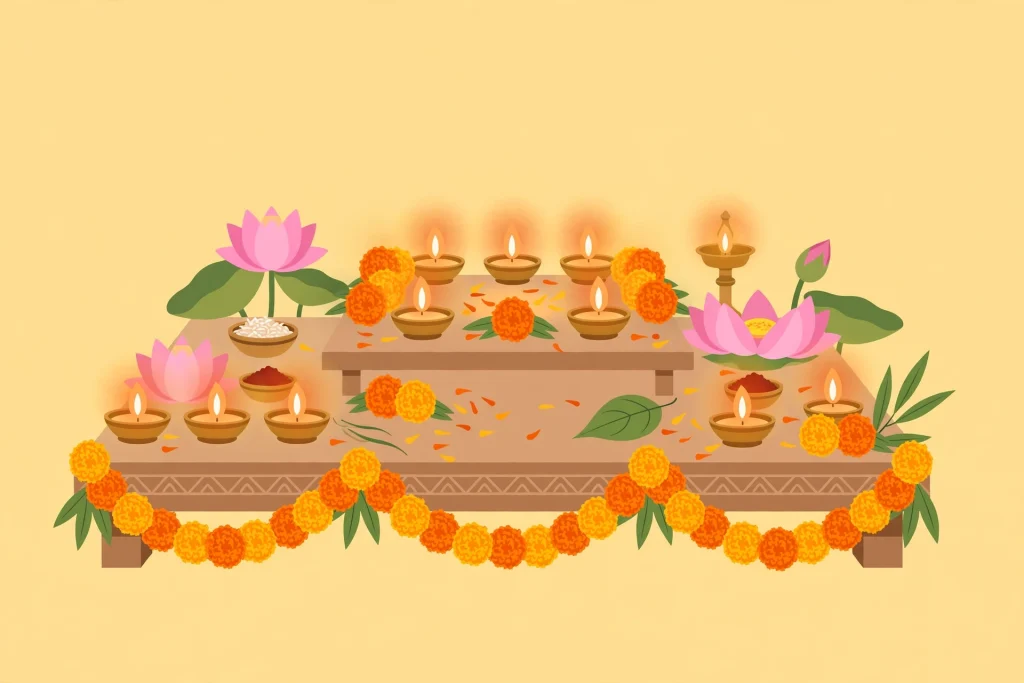
Start in the morning. Bathe, wear clean clothes and clean the home shrine. Place an idol or picture of Goddess Lakshmi and Lord Vishnu, and keep flowers, fruits, sweets and diyas ready.
In the evening, after the moon rises, go to a terrace, balcony or courtyard where the moon is visible. Offer water to Chandra Dev, the Moon God, and pray for calm, health and prosperity. Then worship Goddess Lakshmi with flowers, incense and a diya, and offer sweets and fruits. If your family keeps the tradition, light diyas around the house and sing bhajans through the evening.
At night, during the Nishita muhurat from 11:40 PM to 12:31 AM, perform the main Lakshmi Puja. Recite the Lakshmi Ashtottara or simply chant with devotion, and keep the kheer outside under the moonlight. In the morning, collect the kheer and distribute it as prasad to family members.
Moonlight kheer recipe: ingredients and method
Kheer for Sharad Purnima is deliberately simple, so that the milk and rice carry the ritual. Use full-fat milk for a rich result, and keep the sweetness gentle.
- 1 litre full-fat milk
- 1/4 cup rice, washed and soaked for 30 minutes
- 4 to 5 tablespoons sugar, or to taste
- A pinch of saffron soaked in warm milk
- 1/2 teaspoon cardamom powder
- Chopped almonds, pistachios and cashews for garnish
- Boil the milk in a heavy pan, add the soaked rice, and simmer on a low flame, stirring often, until the rice is soft and the kheer thickens. This usually takes 35 to 45 minutes.
- Add the sugar, saffron milk and cardamom, and simmer for five more minutes.
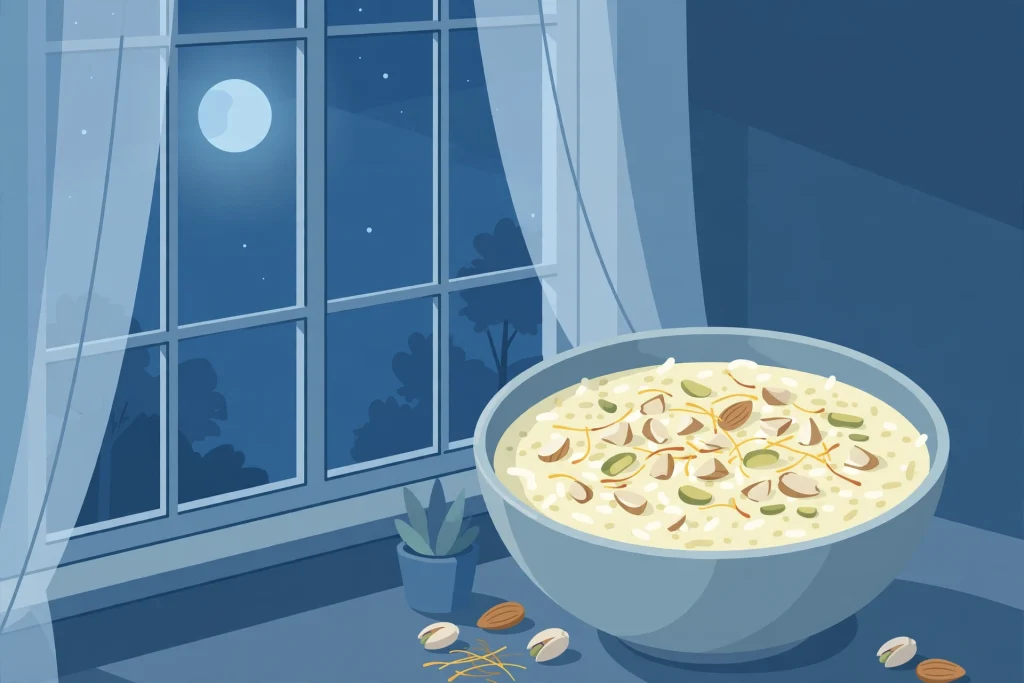
- Pour the warm kheer into a clean vessel, ideally silver, copper, steel or earthenware, and garnish with nuts.
- Cover the vessel with a thin muslin cloth or a mesh lid, so that moonlight reaches it while dust and insects stay out, and place it outdoors under direct moonlight from about 8:00 PM through the night.
- At sunrise on 26 October, bring the kheer inside, offer it to God first, and share it as prasad.
How different regions celebrate Sharad Purnima
The same full moon wears different names across India, and knowing them makes the festival richer.
- Bengal and Odisha: Kojagari Lakshmi Puja. Families worship Goddess Lakshmi, stay awake through the night, and in Odisha, young women observe Kumar Purnima, praying for a good life partner and the well-being of brothers.
- Braj, around Mathura and Vrindavan: Raas Purnima. Temples celebrate Krishna’s Maha Raas, the divine dance with the gopis on a moonlit autumn night, and Krishna is dressed in white.
- Gujarat: Sharad Poonam. Families gather on terraces, sing garba-like devotional songs, and share masala milk and kheer under the moon.
- Maharashtra: Kojagiri Purnima. People prepare masala milk or kheer, keep it under moonlight, and temples organise Lakshmi puja, bhajans and community gatherings.
- North India generally: families combine Lakshmi Puja, Chandra arghya and the kheer ritual, and newly married women often begin their year-long Purnima fast from this night.
Do’s and don’ts, and a food safety note
Keep the night simple and safe. Use a clean vessel for the kheer, cover it with muslin rather than leaving it fully open, and do not keep it outside if your area has heavy dust, smoke or insects that night. In the morning, check that the kheer smells fresh before serving, and refrigerate any leftover prasad rather than leaving it out through the day. People with diabetes or lactose intolerance can prepare a small portion with less sugar, or simply join the puja and the moonlit gathering without eating the prasad.
Small, steady health habits make festive eating easier to enjoy. Our guide to simple home fitness routines here:
Frequently Asked Questions
When is Sharad Purnima in 2026?
Sharad Purnima 2026 is on Sunday, 25 October. The Purnima tithi begins at 11:55 AM on 25 October and ends at 9:41 AM on 26 October.
What is the moonrise time for Sharad Purnima 2026?
Moonrise is around 5:00 PM in Delhi, with small variations by city. Check your local panchang for your exact time.
Why is kheer kept under the moonlight on Sharad Purnima?
Devotees believe the full moon’s rays on this night drip nectar, and that kheer kept under the moonlight absorbs this blessing. It is offered to God and eaten as prasad the next morning.
What is the Kojagari puja time in 2026?
The Kojagari Nishita puja time is from 11:40 PM on 25 October to 12:31 AM on 26 October, for New Delhi. Timings vary slightly by city.
Why is Sharad Purnima called Kojagari Purnima?
Kojagari comes from “Ko Jagarti”, meaning “Who is awake”. Tradition says Goddess Lakshmi asks this at midnight and blesses those who stay awake in worship.
Which gods are worshipped on Sharad Purnima?
Goddess Lakshmi, Lord Vishnu, Lord Krishna and Chandra Dev, the Moon, are worshipped on this night.
Conclusion
Sharad Purnima is a festival that asks for very little and gives a great deal: a clear sky, a bowl of kheer, a lit diya and a few quiet hours with family. Tonight, as the full moon rises with all sixteen kalas, take the time to step outside, offer water to the moon, and let the night slow you down before the busy Diwali fortnight begins. Prepare the kheer with care, keep it safe under the moonlight, and share it as prasad in the morning. Whether you keep the full jagaran or simply join the evening puja, the blessing of Sharad Purnima is the same: calm, gratitude and light, carried home under one bright moon.

3 Comments
Pingback: Valmiki Jayanti 2026: Date, Timings and Significance
Pingback: Beparwah Movie: Ahaan Panday, Sharvari First Look and 26 March 2027 Release
Pingback: Winter Skin Care Routine for India: Dry Skin Guide That Actually Works