

Introduction
Between office deadlines, traffic, family duties and endless notifications, fitness is usually the first thing busy Indians give up. Gym memberships go unused, morning walks get postponed, and “I will start from Monday” becomes a running joke. But here is the truth: you do not need a gym, expensive equipment or two free hours a day to stay fit in 2026. What you need is a set of small, simple home fitness habits that fit into a real Indian schedule.
This guide lists 10 practical habits you can do at home, most of them in 10 to 20 minutes, with zero equipment. They are built for working professionals, homemakers, students and anyone who wants to feel more energetic without turning life upside down.
1. Start the Day with 10 Minutes of Movement
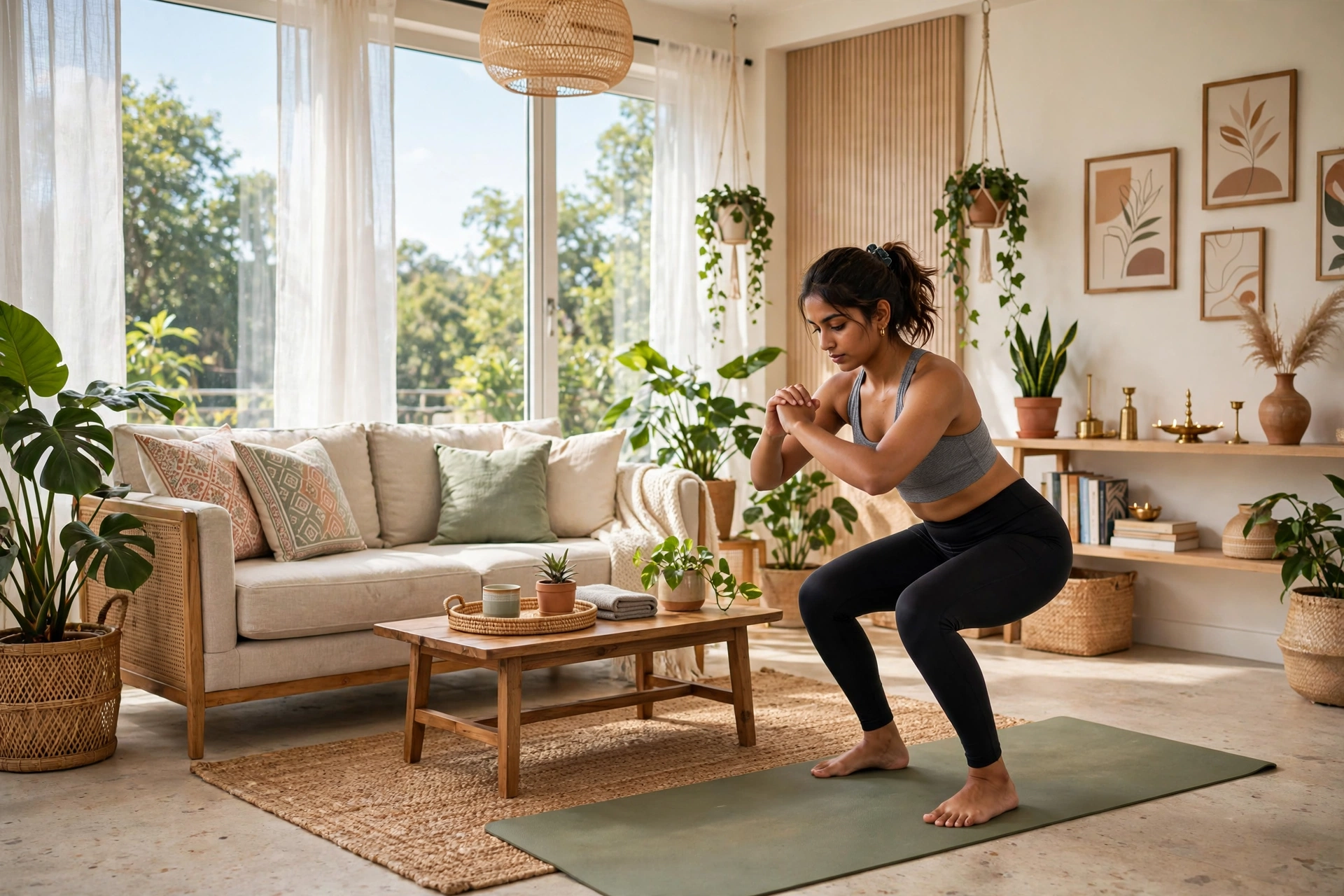
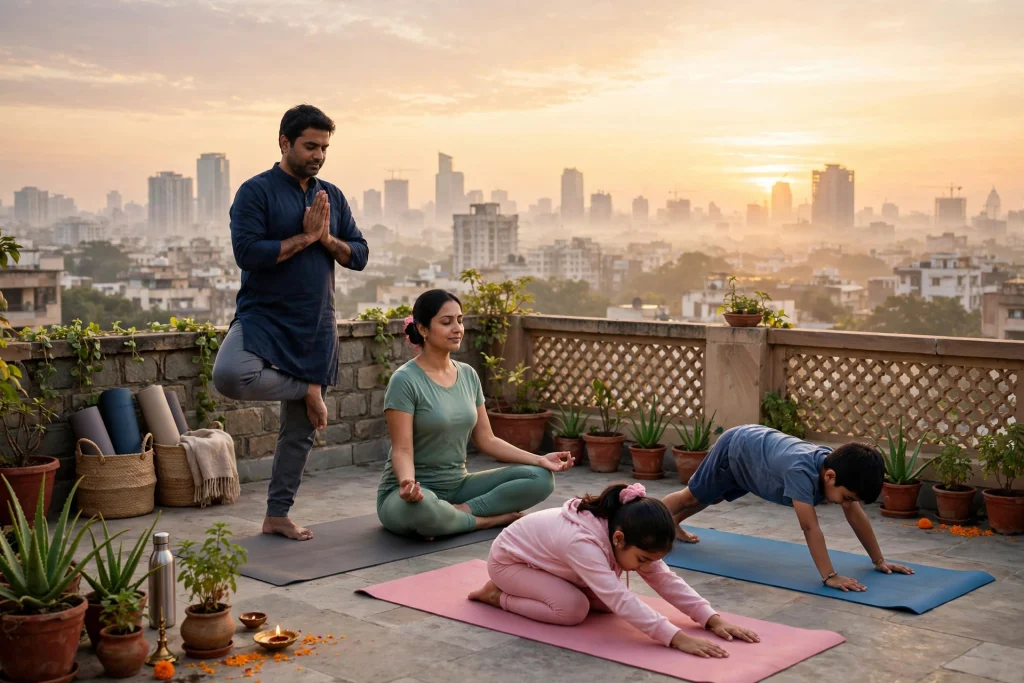
Forget the idea that a workout must last an hour. Ten minutes of bodyweight movement every morning, jumping jacks, squats, push-ups against a wall and spot jogging, wakes up your body and sharpens your mind. Do it before you check your phone. Consistency with 10 minutes beats an occasional 60-minute session every time.
2. Walk After Every Meal
A 10 to 15 minute walk after lunch and dinner is one of the simplest habits with the biggest payoff. It helps digestion, controls blood sugar spikes and burns extra calories without feeling like exercise. In Indian homes, this can be a family habit: walk together on the terrace or around the society compound.
3. Use the Stairs, Skip the Lift
If you live or work in a building, climbing stairs is free cardio. Start with two or three floors and build up gradually. Ten minutes of stair climbing burns roughly the same calories as a light jog, and it strengthens your legs and heart at the same time.
4. Do Bodyweight Strength Training Twice a Week
You do not need dumbbells to build strength. Squats, lunges, push-ups, planks and glute bridges, done in 3 rounds of 10 to 12 repetitions, twice a week, are enough to keep muscles active and joints healthy. Strength training also protects your back and knees, which matters a lot for people who sit at a desk all day.
5. Stretch for 5 Minutes Before Bed
Five minutes of gentle stretching before sleep, neck rolls, shoulder stretches, hamstring stretches and a child’s pose, releases the tension collected during the day. It improves sleep quality, and better sleep means better energy, mood and willpower the next day.
6. Keep a Water Bottle in Sight
Dehydration is one of the most common reasons for afternoon tiredness and headaches. Keep a one-litre bottle on your desk or in the kitchen and finish at least 3 litres through the day. Many Indians drink too little water in air-conditioned offices; a visible bottle is a simple reminder that works.
7. Swap One Snack a Day for Fruit or Sprouts
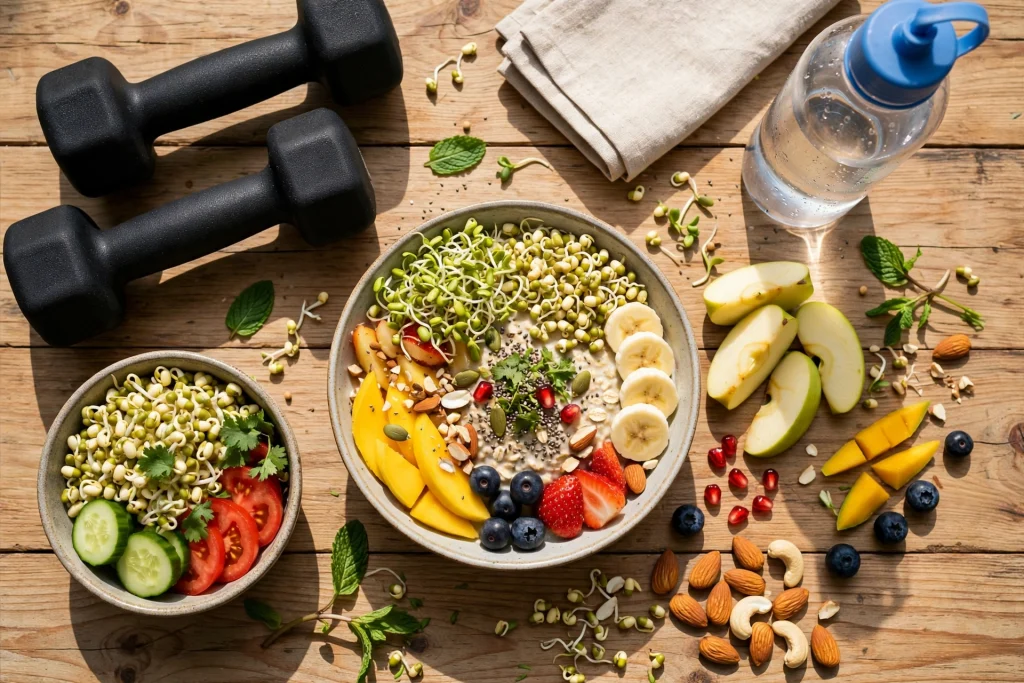
Fitness is not only about movement. Replacing one packet of chips or biscuits with a bowl of sprouts, roasted makhana or a fruit keeps calories in check without any feeling of dieting. Small food swaps, repeated daily, change your body composition over months.
8. Do a 7-Minute Home Circuit on Busy Days
On days when even 20 minutes feels impossible, do a 7-minute circuit: 30 seconds each of jumping jacks, wall sit, push-ups, sit-ups, step-ups on a sturdy stool, squats and plank, with 10-second rests. It is short enough to fit between meetings and strong enough to keep your habit streak alive.
9. Stand Up and Move Every Hour
Sitting for 8 to 10 hours is now called the new smoking for a reason. Set a phone reminder to stand up, stretch and walk for 2 minutes every hour. Over a workday, those small breaks add up to 15 to 20 minutes of movement, and they protect your neck, back and eyes.
If you track your steps, you will be surprised how much these micro-breaks help you cross 7,000 to 8,000 steps a day. Affordable fitness bands and smartwatches make this easy to monitor, and you can read about the latest options in our roundup of the latest smartphone and technology launches.
10. Fix Your Sleep Timing
No fitness plan works on 5 hours of sleep. Aim for 7 to 8 hours and keep a fixed sleep and wake time, even on weekends. Good sleep improves fat loss, muscle recovery and next-day food choices. Put the phone away 30 minutes before bed; your body will thank you.
How to Stay Consistent: 5 Practical Tips
Starting is easy; continuing is the real challenge. These tips keep the habits alive:
- Start with 3 habits, not 10. Master a few, then add more.
- Tie habits to existing routines. Stretch after brushing your teeth; walk right after dinner.
- Track with a simple calendar. Mark an X for every day you complete your habits.
- Involve family. With the festive season approaching, a family fitness reset works wonderfully, especially as Diwali sweets and celebrations test everyone’s willpower.
- Be kind after a missed day. One missed day is an accident; missing twice in a row is the start of quitting. Just restart.
Like the quiet discipline of leaders such as Ratan Tata, whose life shows the power of steady daily values, fitness is built by small actions repeated for years, not by one heroic month.
Frequently Asked Questions
Can I get fit at home without any equipment?
Yes. Bodyweight exercises like squats, push-ups, lunges and planks build strength and fitness effectively. Equipment helps later, but it is never required to start.
How much time do I need daily for home fitness?
20 to 30 minutes a day is enough for general fitness, and even 7 to 10 minutes on busy days keeps the habit alive. Consistency matters more than duration.
What is the best time to exercise at home?
The best time is the time you can repeat daily. Mornings work well for most busy Indians because evenings get unpredictable with work and family.
Is walking enough exercise for weight loss?
Walking helps a lot, especially after meals, but combining it with 2 days of bodyweight strength training and sensible food swaps gives much better results.
How do I stay motivated to exercise at home?
Start small, track your days on a calendar, involve family members, and focus on how good you feel after a workout rather than only on the weighing scale.
Do I need protein supplements for home workouts?
For general fitness, no. Dal, paneer, eggs, soya, milk and sprouts give most Indians enough protein. Supplements are optional, not essential.
Conclusion
You do not need a gym membership, fancy equipment or hours of free time to be fit in 2026. These 10 simple home fitness habits, morning movement, post-meal walks, stairs, bodyweight strength, stretching, water, smart snacking, short circuits, hourly breaks and fixed sleep, fit into a busy Indian life without friction. Pick three, start today, and add the rest over the coming weeks. A year from now, you will not remember the day you started. You will only feel the difference.

2 Comments
Pingback: How to Save Money from Salary in India 2026: Monthly Budget Guide
Pingback: Morning Routine for Students: Best Healthy Tips