

Introduction: Why E20 Is in the News Again
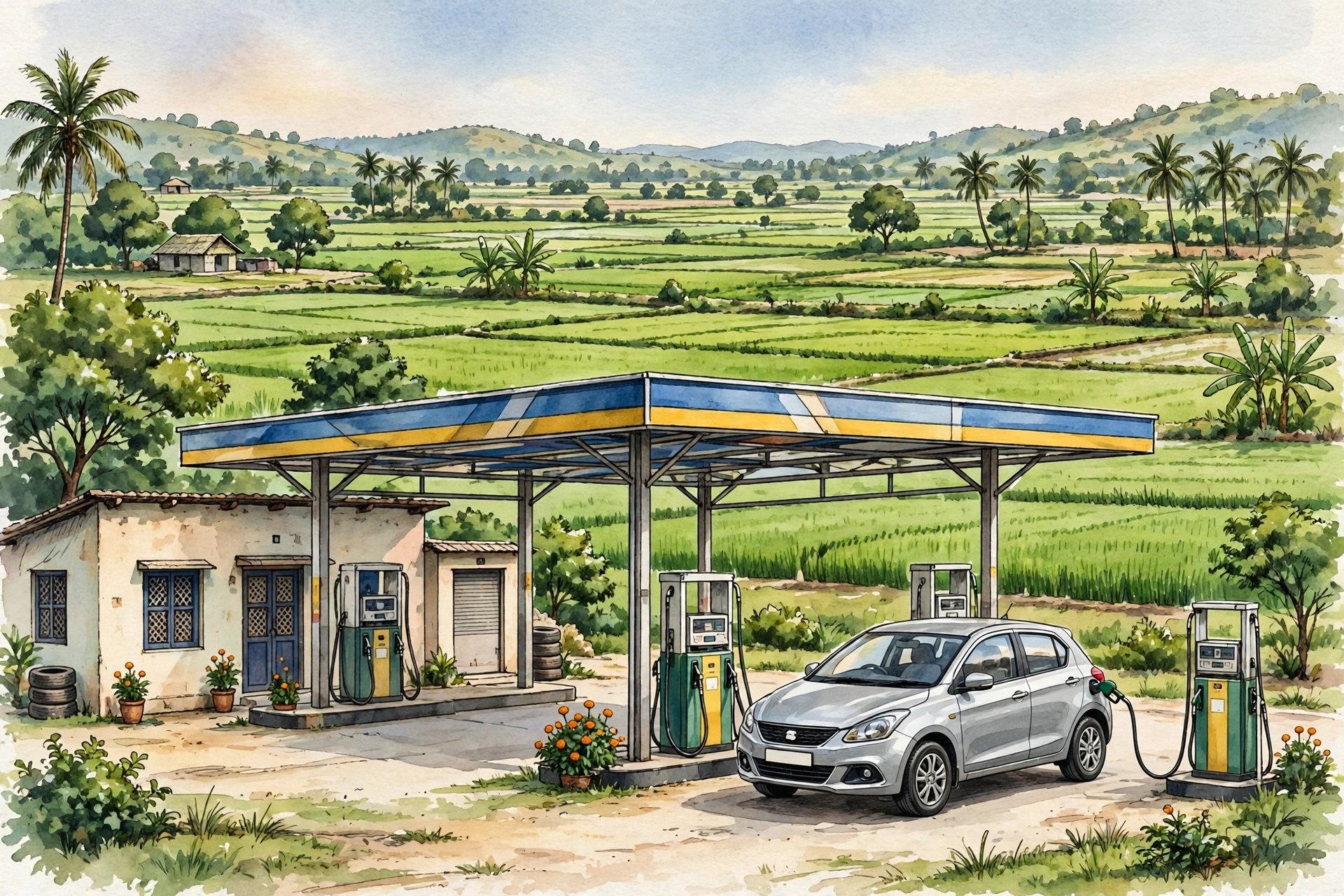
If you drive a petrol car in India, you have almost certainly filled up with E20 petrol without thinking twice about it. The “E20” label on the pump simply means the fuel contains 20 percent ethanol blended with 80 percent petrol. India reached the 20 percent target about five years ahead of schedule, a milestone the government has often highlighted with pride.
Now the picture for the new supply year looks different. According to industry insiders reported by Reuters on 4 November 2026, the proportion of ethanol in Indian petrol in the 2026-27 supply year, which began in November 2026, is poised to fall below the official 20 percent target. Four ethanol producers expect blending of 15 to 17 percent, depending largely on maize prices, and G.K. Sood, chairman of KN Agri Resources, put the figure at around 15 percent.
That headline has understandably worried many drivers. Will E20 petrol disappear from pumps? Will your car’s mileage change? Should owners of older vehicles do anything differently? The short version first: this is a supply level shortfall, not a withdrawal of E20 petrol and not a ban. E20 is not being taken away. What may change is how much ethanol, on average, ends up in the petrol sold across the country during this supply year.
What E20, E15 and E10 Actually Mean
The letter “E” stands for ethanol, a type of alcohol made mainly from crops such as sugarcane, maize and rice. The number after it tells you the percentage of ethanol in the fuel. E10 means 10 percent ethanol and 90 percent petrol. E15 means 15 percent ethanol and 85 percent petrol. E20 means 20 percent ethanol and 80 percent petrol. The rest, in every case, is ordinary petrol.
Ethanol is attractive for a simple reason. India imports a large share of the crude oil it refines into petrol, and every litre of ethanol blended into fuel is a litre of petrol that does not have to be imported. Since 2014, the programme has saved nearly Rs 2 lakh crore in oil import costs, with annual savings estimated at Rs 43,000 crore at 20 percent blending.
It is worth noting that the blend level is a national average across the supply year, not a promise about every litre at every pump on a given day. Reports of a fall to 15 to 17 percent therefore describe the overall supply year picture, not a sudden switch at your local petrol station tomorrow morning.
Why Blending May Fall to 15 Percent This Year
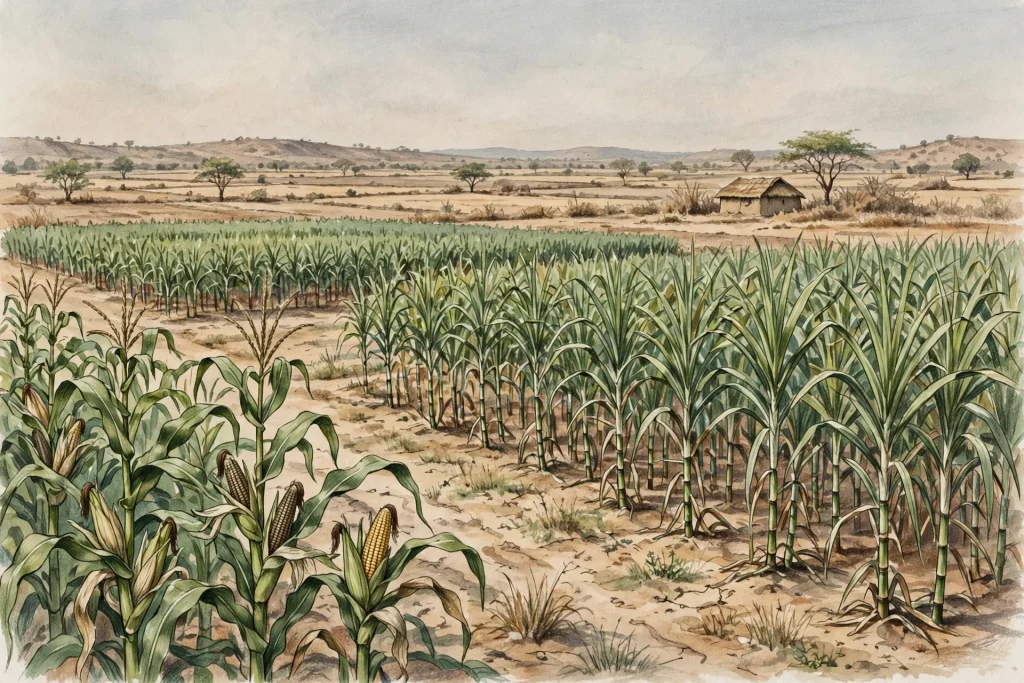
The reason is not a change of policy. It is a bad monsoon. A severe El Nino cut monsoon rainfall nearly 13 percent below normal, making it the weakest monsoon in more than a decade. Maize and sugarcane, the two main feedstocks for ethanol in India, were hit hard, and industry estimates say maize production could fall up to 15 percent from a record 55 million tonnes.
When a crop is scarce, its price rises, and that is exactly what has happened. Maize and sugar prices rose around 40 percent to record highs, rice rose 20 percent, and retail food inflation reached 7.74 percent in September, up from 5.97 percent in August. The same crops that would have gone into ethanol are now more expensive, and more urgently needed, as food.
Ethanol producers are therefore squeezed from both sides. Their raw material costs more, while the price they are paid for maize-based ethanol has been cut, to Rs 68.86 per litre from Rs 71.86 per litre for the new supply season. At the same time, oil marketing companies have been directed not to procure sugar-based ethanol in the new supply season. With feedstock expensive and margins thinner, producers expect to supply less ethanol than the 20 percent target requires.
There is a second structural problem. Distillers expanded capacity to about 20 billion litres a year in anticipation of continued growth in blending. If demand falls short of that capacity, distillers face idle plants and excess capacity risk, a problem that depends on crop output, prices and procurement across the full supply year.
Why Food Is Being Prioritised Over Fuel in a Drought Year
This is the part of the story that deserves the most understanding, because it is easy to read a lower blending figure as a failure and miss the trade-off behind it. Maize is food. It feeds people directly, it feeds poultry and livestock, and it is a raw material for starch and other food products. Sugarcane becomes sugar. When a weak monsoon reduces the harvest of both, every tonne diverted to fuel is a tonne not available for food, animal feed or sugar.
In a year when food inflation is already running at 7.74 percent, pushing scarce maize and sugarcane into fuel tanks would risk pushing food prices higher still. Accepting a lower blending level for now reflects that priority: keeping food supplies and prices stable comes first in a drought year. It is a reminder that ethanol blending sits on top of the farm economy, and the farm economy depends on the rain.
None of this means the blending programme has been abandoned. The long-term direction, cutting oil imports and building a domestic ethanol industry, remains in place. What has changed is the realistic supply for one difficult year, shaped by weather that nobody controls. The government has also clarified it has no plans to increase blending beyond 20 percent.
What a Lower Blend Means for Your Car
For most drivers, the practical answer is reassuring: a move from an average of 20 percent ethanol to 15 to 17 percent is a modest change, not a different fuel. Your car will still run on petrol blended with ethanol, just with a slightly smaller ethanol share on average. You do not need to change your fuel, your driving style or your service routine because of this news alone.
Two concerns have been raised by motorists in the past, and both are worth addressing honestly. The first is fuel efficiency. Ethanol contains less energy per litre than petrol, so in theory a higher ethanol share can reduce mileage slightly, and a lower share could move it slightly in the other direction. In practice, the difference between E20 and E15 for an individual driver is small, and it is easily swamped by traffic, tyre pressure, air conditioning use and maintenance. This article does not claim a precise mileage gain or loss figure, because no such figure has been established for your specific car. If you want to know what is happening with your own car, track your mileage over several full tanks under similar driving conditions, rather than judging by a single fill.
The second concern is engine wear, particularly for older vehicles. Ethanol can be harder on certain rubber parts, seals and fuel system components in vehicles not designed for higher blends, and it absorbs moisture more readily than petrol. That is a genuine technical consideration, but it is not new, and it is not created by a fall from 20 percent to 15 percent. If anything, a slightly lower ethanol share reduces that exposure. The sensible response is not panic but good maintenance, which brings us to the checklist below.
Checklist for Older Vehicles
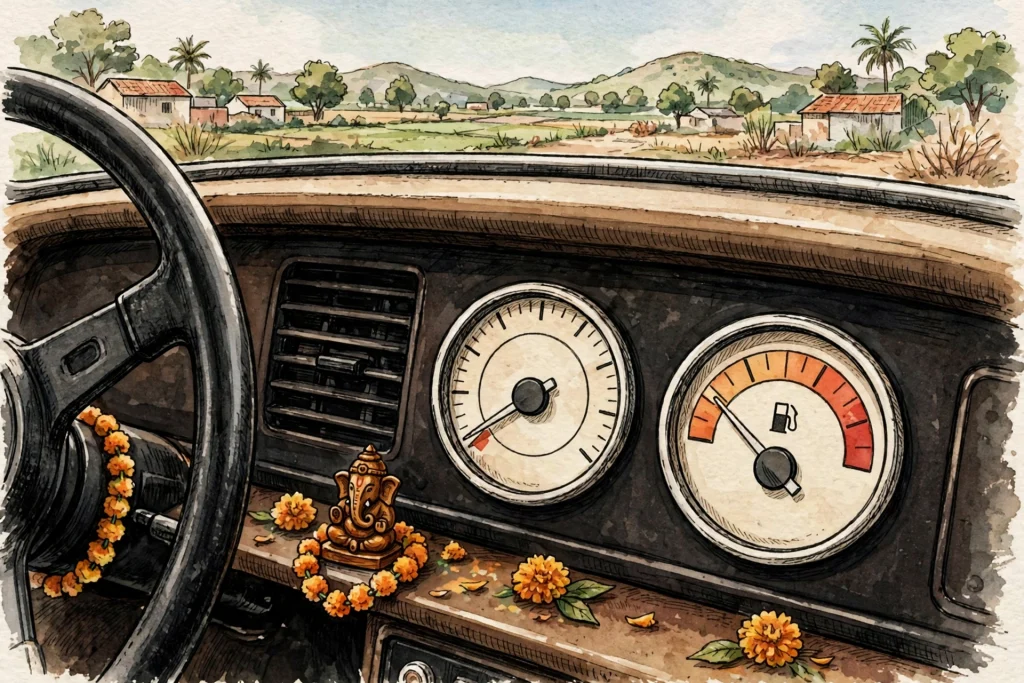
If your car is more than ten years old, or if you are unsure whether it is rated for E20, these five checks are worth doing. They cost little, they are good practice regardless of the blending level, and they remove guesswork.
- Check your owner manual and fuel cap. The manual states the maximum ethanol blend your vehicle is designed for, and many fuel caps carry the same marking. Follow what the manufacturer says.
- Follow the service schedule. Regular servicing catches ageing fuel hoses, seals and filters before they become problems. Tell your service centre about any fuel smell, rough idling or starting trouble.
- Use authorised fuel stations. Fuel from authorised outlets is tested and traceable, which matters more than any additive when it comes to fuel quality.
- Do not mix additives on guesswork. Fuel additives are not a substitute for the right fuel or for maintenance, and mixing them without a clear reason can do more harm than good.
- Do not let petrol sit for months. Ethanol-blended fuel absorbs moisture over time, so a vehicle parked for a long period deserves a fresh fill and a short drive before any long trip.
If your car is E20 compatible, which most cars sold in recent years are, you do not need to do anything special. Fill up as normal, keep up with servicing, and ignore alarming messages that claim E20 has been banned or withdrawn. It has not.
What to Watch Next
The blending level for 2026-27 will not be decided by one news report. Three things are worth watching. First, maize prices: if they stay near record highs, blending will stay under pressure, but if they ease, producers will have more room to supply. Second, winter sowing: the rabi crop will give an early signal about crop availability in the months ahead. Third, official blending data: monthly figures will show whether the actual blend tracks closer to 15 percent or 17 percent, or recovers toward 20 percent.
Frequently Asked Questions
Is E20 petrol being withdrawn in India?
No. E20 petrol is not being withdrawn and it is not banned. What industry insiders expect is that the average ethanol share in petrol during the 2026-27 supply year may fall to 15 to 17 percent, below the 20 percent target, because of tight maize and sugarcane supplies after a weak monsoon. That is a supply shortfall, not a withdrawal.
Why is blending expected to fall to 15 to 17 percent?
A severe El Nino cut monsoon rainfall nearly 13 percent below normal, the weakest monsoon in more than a decade. Maize production could fall up to 15 percent from a record 55 million tonnes, maize and sugar prices rose around 40 percent to record highs, and oil marketing companies have been directed not to procure sugar-based ethanol this season.
Will my car’s mileage improve if blending falls?
It might change very slightly, because ethanol contains less energy per litre than petrol, but the difference between E20 and E15 is small for an individual driver and is easily outweighed by traffic, driving style, tyre pressure and maintenance. No precise mileage gain or loss figure applies to every car, so be sceptical of any claim that promises one.
Is E20 safe for older cars?
Most modern cars are rated for E20, but some older vehicles were not designed for higher ethanol blends, and ethanol can affect certain rubber parts and seals over time. Check your owner manual and fuel cap for the maximum blend your car is rated for, follow the service schedule, use authorised fuel stations and do not add fuel additives on guesswork. A lower blend, if it happens, reduces ethanol exposure rather than increasing it.
Conclusion
India’s ethanol story in 2026-27 is, at heart, a story about rain. A weak monsoon hit the maize and sugarcane harvest, food prices rose, and the fuel programme that depends on those crops now faces a difficult year. Blending may fall to 15 to 17 percent, and that is a real shortfall against the 20 percent target, but it is not a withdrawal of E20, not a ban, and not a reason for drivers to change their habits overnight. Keep your car serviced, check what your manufacturer recommends, buy fuel from authorised stations, and judge your mileage by your own records. For wider context, read about the India 500 GW renewable energy summit, the new rules from 1 November 2026, and GST collections October 2026.
