


Several rules changed in India on 1 November 2026, and most of them touch everyday life: your phone, your car, your gas cylinder, your pension paperwork and your investments. None of them needs panic, but a few need a small action from you, and a few others only need you to know what has changed so you are not surprised by a bill, a toll charge or a call display. This guide brings the main 1 November changes together in one place, explains who each change affects, what you should do about it, and what you should ignore. Where a change is being rolled out in stages, or where the exact date varies by state or operator, this guide says so clearly, because that is where most confusion comes from.
At a Glance: What Changed on 1 November 2026
The headline changes are: Calling Name Presentation, or CNAP, which shows the registered name of a caller on supported mobile networks; a concessional FASTag local pass for private vehicle owners who live within 20 km of a national highway toll plaza; the regular monthly revision of LPG cylinder prices, with commercial cylinders revised and domestic cylinders unchanged in Delhi at the time of writing; simpler GST procedures, including faster provisional refunds for businesses in an inverted duty structure and clearer treatment of discounts given after a sale; direct mutual fund plans becoming the default on asset management companies digital platforms; and the start of the November window for pensioners to submit their annual life certificate. Two nationwide campaigns also began on 1 November: the fifth Digital Life Certificate campaign, running to 30 November, and Janjatiya Gaurav Pakhwada, running to 15 November. Keep this list as your checklist, then read the section that applies to you.
CNAP: Your Phone May Now Show the Caller’s Name
CNAP stands for Calling Name Presentation. In simple terms, when someone calls you on a supported 4G or 5G network, your phone can now display the name registered against that number in the telecom operator’s KYC records, along with the number itself. You do not need to install a third party caller identification app to see it, and you do not need to pay extra for it. The feature is being rolled out by telecom operators on the government’s instruction, and availability depends on your operator, your network (4G or 5G) and your handset. If you do not see names yet, that does not mean something is wrong with your phone: it usually means the rollout has not reached your operator, circle or device model yet.
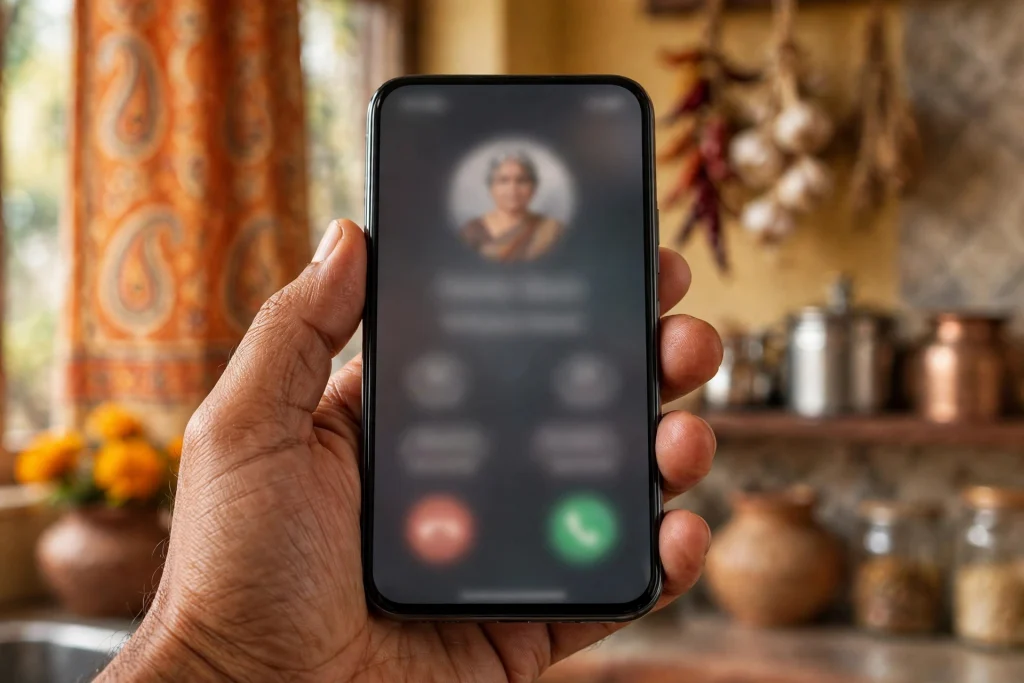
What CNAP Means for You, and What It Does Not Mean
CNAP helps you decide whether to answer an unknown number, and it makes it harder for a caller to hide completely behind an unfamiliar number. It does not, however, make every call safe. A displayed name comes from KYC records, and a genuine looking name is not proof that the caller is who they claim to be in conversation. Scam callers can still use social engineering, and they can still pressure you to share OTPs, install apps or transfer money. So use CNAP as a first filter, not as a final verdict. If a caller claims to be from your bank, a government office or a courier company and asks for money, an OTP or remote access to your phone, hang up and call the organisation back on its official number. That rule has not changed, and no new display feature replaces it. Also note that CNAP shows the registered name, which may be a company name, a family member’s name if the connection is in their name, or a slightly different spelling from the name you know. Small mismatches like that are normal and are not, on their own, a sign of fraud.
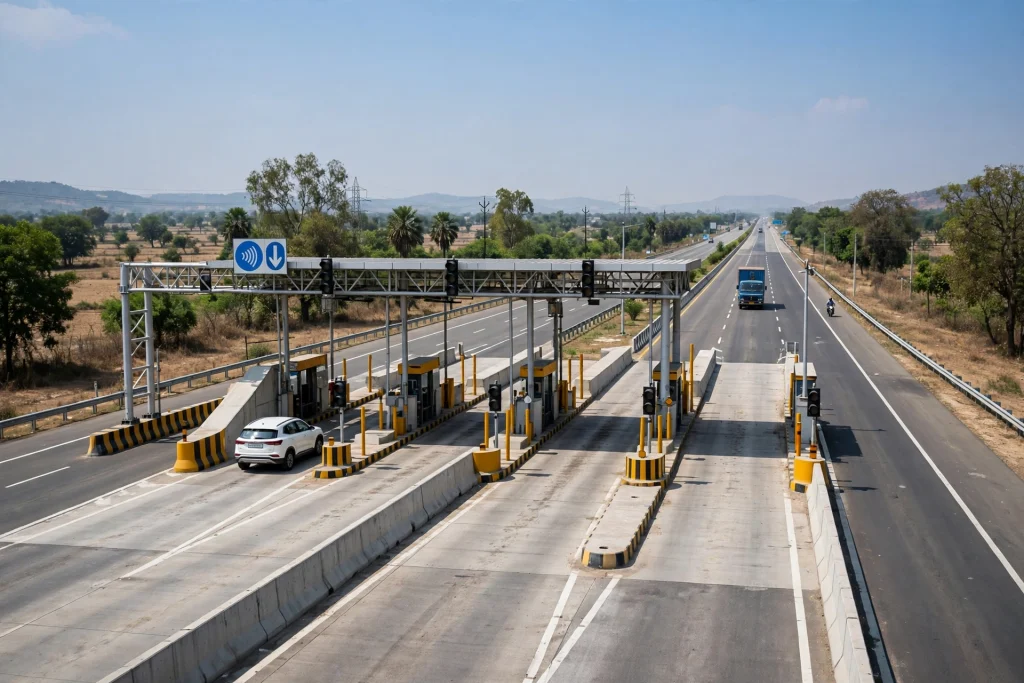
FASTag Local Pass: Rs 1,500 or Rs 3,000 a Year Near Your Toll Plaza
If you live near a national highway toll plaza and cross it often, this is the change most likely to save you money. From 1 November 2026, eligible private vehicle owners who live within 20 km of a designated toll plaza can buy a concessional annual FASTag local pass. The price is Rs 1,500 a year at plazas outside municipal or town limits, and Rs 3,000 a year at plazas inside those limits. For comparison, the standard FASTag annual pass for 2026-27 costs Rs 3,075. The local pass is valid only at the specific toll plaza for which it is issued. It cannot be transferred to another plaza, even one nearby on the same route.
Who Can Get the FASTag Local Pass, and Who Cannot
Three conditions matter. First, the vehicle must be a non-commercial, private vehicle. Commercial vehicles are not covered. Second, the owner must live within 20 km of the toll plaza, and the address on record must support that. Third, the vehicle must have a valid, working FASTag registered for non-commercial use. The pass is not available at toll plazas on highways or expressways that use a closed user fee collection system, and it is not issued where commuters have a service road or an alternative road available. The pass is also tied to the owner, the vehicle and the FASTag together: if you sell the car, the pass does not travel with it, because the new owner will have a different registration record and address, and will need their own FASTag and pass. At launch, the pass is available at eligible toll plazas themselves from 1 November 2026, and through the Rajmargyatra app from 1 December 2026. Before paying, check that your specific plaza is eligible, because not every plaza on your route will be.
LPG Prices: Commercial Cylinders Revised, Domestic Cylinders Unchanged in Delhi
Oil marketing companies revise LPG prices on the first of every month. From 1 November 2026, the price of the 19 kg commercial LPG cylinder rose, while the price of the 14.2 kg domestic cylinder was unchanged in Delhi. In Delhi, a 19 kg commercial cylinder now costs Rs 2,820, up Rs 10 from Rs 2,810 in October, and the domestic cylinder continues at Rs 942. The direct effect on most households is therefore small, because domestic cylinder prices did not move in Delhi. The indirect effect matters more: hotels, restaurants, roadside eateries and catering businesses pay more for commercial gas, and sustained increases in commercial fuel costs can eventually show up in food prices. Prices vary by city because of taxes and transport costs, so check your city’s current price rather than assuming the Delhi figure applies everywhere. If you run a small food business, this is a good moment to review your monthly fuel cost and your menu pricing, rather than absorbing the increase silently for months.
GST Changes: Simpler Discount Accounting and Faster Refunds
Businesses will notice two GST changes from 1 November. First, the accounting treatment of discounts offered after a sale is being simplified, which should reduce disputes about how post sale discounts affect taxable value. Second, provisional refunds are being made faster for businesses operating under an inverted duty structure, where the tax rate on inputs is higher than the rate on outputs. For ordinary consumers, these changes do not create a new form to fill in. Their value is indirect: simpler compliance for businesses usually means fewer billing errors and less time spent on paperwork, which is good for small traders in particular. If you run a business, ask your accountant which of your transactions fall under the new discount rules and whether your refund claims qualify for the faster provisional route, rather than assuming your old process still fits.
Mutual Funds: Direct Plans Become the Default Online
From 1 November, direct mutual fund plans have become the default option on asset management companies digital platforms. A direct plan is one you buy straight from the fund house, without a distributor, so its expense ratio is usually lower than the regular plan of the same fund. That does not mean every investor should switch immediately. If you already invest through a distributor who gives you advice you value, a regular plan may still suit you. If you invest on your own and understand the fund, a direct plan usually keeps more of your return. The practical step is simple: check which plan type your existing investments are in before making a new purchase, and do not assume a new online purchase will match your old plan type automatically. For first time investors, the default is now a useful nudge towards lower costs, but it is not a substitute for choosing a fund that matches your goal and risk appetite.
Pensioners: Life Certificate Window Opens in November
Government pensioners below the age of 80 can submit their annual Jeevan Pramaan life certificate between 1 and 30 November. Pensioners aged 80 and above have an earlier window, from 1 October, which is already open. The fifth nationwide Digital Life Certificate campaign also runs from 1 to 30 November 2026, covering 2,000 cities and districts, with a target of 2.30 crore certificates, including 1.50 crore face authenticated certificates. If you are a pensioner, or you help an elderly parent with paperwork, the useful action is to submit the certificate early in November rather than in the last week, when camps and portals are busiest. Face authentication through a smartphone is an option for many pensioners, but if that does not work for you, the usual physical submission routes remain available. Do not share your pension account details or OTP with anyone who calls offering to submit the certificate for you.
Other Changes That Started on 1 November
Two further items are worth noting. First, Janjatiya Gaurav Pakhwada, a fortnight celebrating tribal pride and heritage, is observed from 1 to 15 November 2026, culminating in Janjatiya Gaurav Diwas on 15 November, the birth anniversary of Bhagwan Birsa Munda. Events and programmes during the fortnight focus on tribal history, health and forest rights, including new digital platforms for tribal health data and forest rights. Second, 1 November itself is a state formation day for several states, including Haryana, which marks 60 years since its formation in 1966, and the anniversary of the 1956 reorganisation that created several linguistic states. These are not rule changes that need action from you, but they explain why 1 November carries so much official news every year. Also, some state specific prices changed on 1 November, such as a reported Rs 8 per litre rise in milk prices in Karnataka, so check local announcements for your state rather than treating a national list as complete.
What You Should Do This Week: A Simple Checklist
For your phone: note whether CNAP names have started appearing, and keep the rule that no displayed name overrides a request for money or OTPs. For your car: if you live within 20 km of a toll plaza, check that plaza’s eligibility for the Rs 1,500 or Rs 3,000 local pass before your next renewal, and compare it with the Rs 3,075 standard annual pass. For your home: if you buy domestic LPG, note that Delhi prices were unchanged, and check your city’s price if you live elsewhere. For your business: ask your accountant about the new GST discount and refund procedures. For your investments: check whether your next mutual fund purchase will be a direct or regular plan. For pensioners in your family: submit the life certificate early in November. Doing these six checks once will cover almost everything that changed on 1 November, without needing to follow every news update through the month.
Frequently Asked Questions
What is CNAP and do I need to activate it?
CNAP is Calling Name Presentation, a telecom feature that shows the KYC registered name of a caller on supported 4G and 5G networks. You do not need to activate it or install an app. It appears automatically once your operator and handset support it, and rollout timing varies by operator and circle.
Who can buy the new FASTag local pass from 1 November 2026?
Private, non-commercial vehicle owners who live within 20 km of a designated national highway toll plaza and hold a valid, working FASTag for that vehicle. The pass costs Rs 1,500 a year outside municipal limits and Rs 3,000 a year inside them, is valid only at that one plaza, and is available at eligible plazas from 1 November and through the Rajmargyatra app from 1 December 2026.
Did domestic LPG prices rise on 1 November 2026?
In Delhi, the 14.2 kg domestic cylinder price was unchanged at Rs 942, while the 19 kg commercial cylinder rose by Rs 10 to Rs 2,820. Prices vary by city, so check your local price.
What is the last date for pensioners to submit the life certificate in November 2026?
Pensioners below 80 years can submit between 1 and 30 November 2026. Pensioners aged 80 and above have had an earlier window from 1 October. Submit early in November to avoid last week crowding at camps and portals.
Are direct mutual fund plans now compulsory?
No. Direct plans are now the default on asset management companies digital platforms, but regular plans through distributors remain available. Check the plan type before confirming a purchase, and choose based on whether you want advice and are willing to pay the higher expense ratio that comes with it.
Does CNAP mean a call showing a name is definitely genuine?
No. CNAP shows the name registered in KYC records, which helps you filter unknown numbers, but it does not prove the caller’s intent. Never share OTPs, passwords or money on the basis of a displayed name alone, and call organisations back on official numbers if you are unsure.
Conclusion
The 1 November 2026 changes are best understood as a set of small, practical updates rather than one big reform. CNAP makes unknown calls a little easier to judge, the FASTag local pass makes daily toll crossings cheaper for people who live near a plaza, LPG changes affect businesses more than households this month, GST and mutual fund changes reward businesses and investors who check their paperwork, and the pension life certificate window is a reminder to act early in November. Work through the checklist in this guide once, keep the figures for your own city and plaza, and you will have covered the changes that actually affect you. For more practical guides on staying safe on the phone, read our digital arrest scam safety guide, for the latest science and technology news see our ISRO NVS-03 launch guide, and for the big film release of this festive season see our Ramayana Part 1 guide.

7 Comments
Pingback: Cyclone Murasu Landfall Today: Timing, Affected Areas and Safety Guide
Pingback: Bengaluru Mumbai Vande Bharat Sleeper: Timetable, Fare and Booking Guide
Pingback: GST Collections October 2026: Rs 2.31 Lakh Crore, Second Highest Ever
Pingback: India 500 GW Renewable Energy Plan: Summit 2026, Targets and Investment
Pingback: India E20 Petrol: Why Blending May Fall to 15 Percent and What Drivers Should Do
Pingback: CBSE Date Sheet 2027: Class 10 and 12 Exam Dates and Timings
Pingback: Delhi AQI Today 9 November 2026: Post-Diwali Smog, Worst Areas and Health Tips