

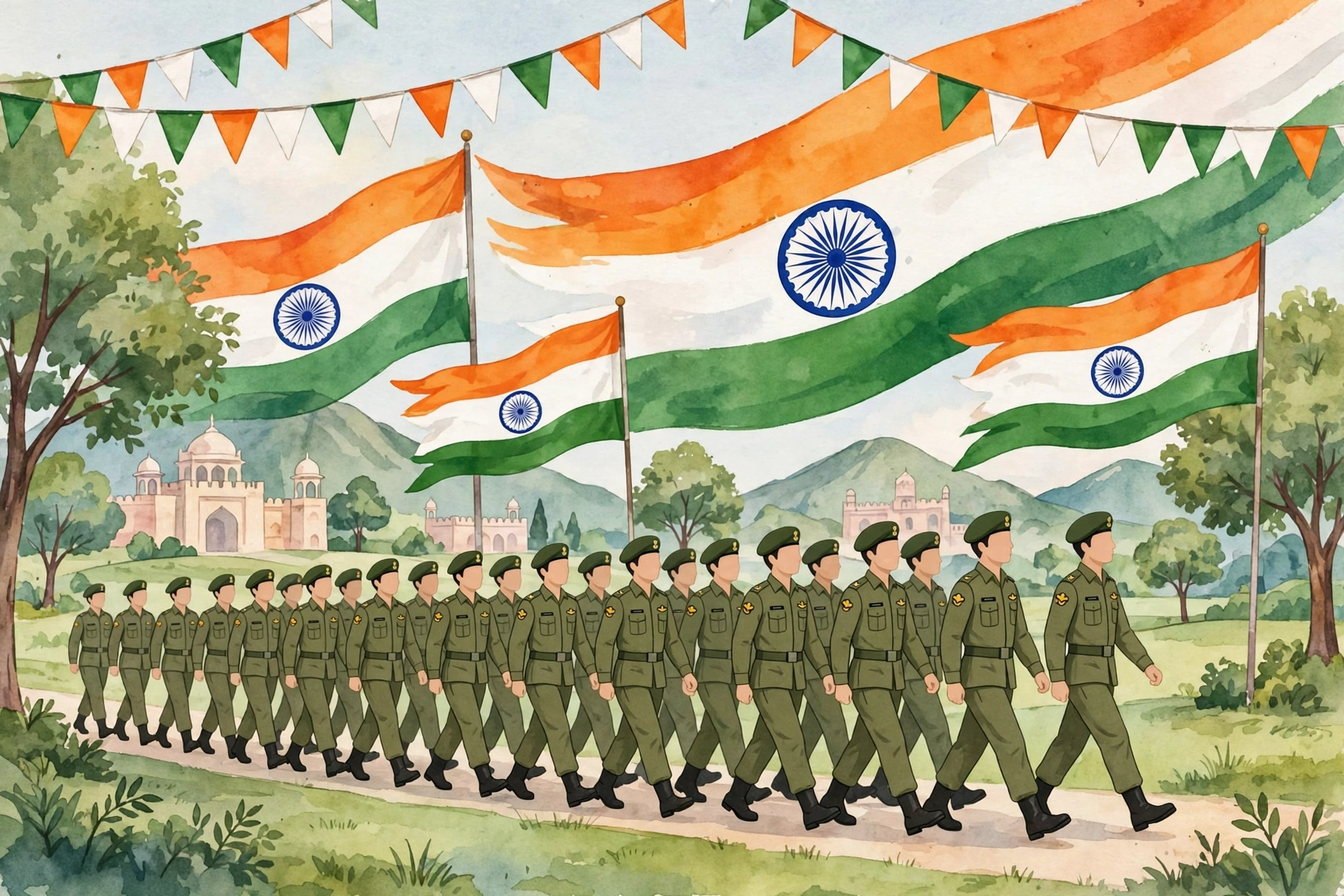
For thousands of young men and women serving as Agniveers, and for their families watching every announcement closely, one question has mattered more than any other: what happens after four years? On 4 November 2026, that question got a clearer, more hopeful answer. Chief of Defence Staff General N.S. Raja Subramani announced that the Union Cabinet has approved an additional two year engagement, called a Second Tour of Duty, for the 75 percent of Agniveers who are not retained in the initial 25 percent merit based selection after four years.
This article explains the announcement in simple language. It covers who is eligible, what changes at four years and at six years, what reports say about pay and Seva Nidhi, how selection is tracked, what has not yet been announced, and what Agniveers and their families should practically do next. It does not invent an application link, a deadline, or a final Seva Nidhi figure, because those details have not been fully published yet. Where a figure comes from reports rather than a confirmed official package, this article says so clearly.
What Was Announced on 4 November 2026
The core announcement is straightforward. The Agnipath scheme itself has not been discontinued, and the initial four year contract remains unchanged. What is new is an extra two year window for most Agniveers. After completing four years, 25 percent of a batch are selected on merit for regular service. The remaining 75 percent, who would earlier have exited at that point, will now be offered a Second Tour of Duty of two more years, taking their total service to six years if they accept and meet the conditions.
Agniveer Timeline in Simple Form
The timeline below puts the scheme and the new extension in order. It helps readers see where the second tour fits, and why the first batch is in focus right now.
- 14 June 2022: The Agnipath scheme began, with an initial four year contract for Agniveers.
- First four years: Agniveers serve, train and are assessed, with performance recorded through annual reviews.
- End of four years: 25 percent are selected on merit for regular service, based on objective selection criteria.
- New step, Second Tour of Duty: The remaining 75 percent are offered an additional two year engagement.
- End of six years: Willing personnel from the second tour will have another opportunity for regular enrolment, subject to objective selection criteria. Absorption is not automatic.
- First batch service end dates reported: Navy tenure ending 21 November 2026, Air Force tenure ending 21 December 2026, and Army tenure ending 31 December 2026.
- 4 November 2026: Chief of Defence Staff General N.S. Raja Subramani announced the Union Cabinet approval for the Second Tour of Duty.
Who Gets What at 4 Years Versus 6 Years
The simplest way to understand the new structure is to compare the two decision points side by side. At four years, the path splits. At six years, there is a second chance, but it is still a selection, not a promise.
- At 4 years, 25 percent: Selected on merit for regular service through the initial merit based selection.
- At 4 years, 75 percent: Offered the Second Tour of Duty, an additional two year engagement, instead of exiting at four years.
- During years 5 and 6: Second tour personnel continue to serve, with pay and allowances as applicable, and with performance continuing to be assessed.
- At 6 years: Willing second tour personnel will have another opportunity for regular enrolment, subject to objective selection criteria.
- At 6 years, important limit: Regular enrolment after six years is not automatic. Selection criteria will still apply, and not everyone will be absorbed.
- After 6 years, if not selected: Personnel will exit with the benefits applicable at that stage, as per the rules then in force. Exact exit package details for the extended period are part of what is still to be fully detailed.
Pay, Allowances and Seva Nidhi: What Reports Say
Pay is the part of the announcement that most readers want in exact numbers, so it is important to separate reported figures from a fully detailed official package. Reports put second tour pay at Rs 43,500 in the first year of the second tour and Rs 47,500 in the second year of the second tour, plus applicable allowances. Those are the reported monthly pay figures for years five and six. They should be read as reported figures, not as a final payslip, because allowances, deductions and service specific components can affect the in hand amount.
On Seva Nidhi, the position is similar but with even more caution needed. Reports say Seva Nidhi will be higher after the extended service, which makes sense because a longer service period means a larger contribution base. However, the revised package has not yet been fully detailed, and exact Seva Nidhi figures for the second tour have not been confirmed in the material available for this article. Any article or social media post that quotes a final Seva Nidhi total for six years as confirmed should be treated with care until the official detailed package is published.
How Performance Is Tracked and Selection Works
According to the Chief of Defence Staff, performance was tracked in a centralised tri-service database, with annual reviews over three to four months of inter-service evaluation. That description matters for two reasons. First, it shows that selection is not based on a single test or a single officer’s opinion alone. It is built from records collected over time. Second, the inter-service element means standards are being compared across services, which is intended to keep the process objective and consistent.
What Is Still Unannounced
Honest reporting requires listing what is not yet known. Readers who only see the headline may assume every detail is settled. It is not, and planning around assumed details can cause problems later.
- Exact Seva Nidhi figures for the second tour: Reports say it will be higher, but the revised package is not yet fully detailed.
- Application process: How an eligible Agniveer formally opts for the Second Tour of Duty, and through which channel, has not been fully detailed in the available announcement.
- Service wise dates and instructions: The reported end dates for Navy, Air Force and Army differ, and each service will need to issue its own timeline and procedure.
- Detailed pay and allowance break up: Reported monthly pay figures are available, but a full official table with allowances and deductions is still awaited.
- Exit benefits at six years: The exact package for second tour personnel who are not selected for regular enrolment after six years is part of the detail still to be confirmed.
- Eligibility conditions in full: Beyond being in the 75 percent not retained at four years, any detailed conditions on conduct, medical fitness or other criteria will be in the service instructions.
Practical Next Steps for Agniveers and Families
The best next steps are practical, low risk and useful whether or not a particular detail changes in the final notification. They do not require an application link, because no official link has been provided in the announcement material used here, and this article does not invent one.
- Stay in touch with your unit and chain of command for the official second tour notice, and follow only instructions issued through service channels.
- Keep your service record organised, including training results, certificates and conduct history, so that any selection review has a complete picture.
- Maintain physical fitness and medical readiness, since fitness remains relevant to continued service and to regular enrolment chances.
- Do not pay anyone who promises selection, a second tour place, or a faster application. Selection is merit based and no genuine process requires such a payment.
- Plan finances on reported pay with caution, and do not commit to large expenses based on an unconfirmed Seva Nidhi total.
- Keep a parallel career plan alive, including study, skill courses or exam preparation, so that six years ends with options whatever the selection outcome.
- Families should discuss the two extra years together, including posting, leave, education of children and household planning, rather than treating the decision as only the Agniveer’s alone.
Frequently Asked Questions
What is the Agniveer 2 year extension?
It is an additional two year engagement, called a Second Tour of Duty, approved by the Union Cabinet for the 75 percent of Agniveers who are not retained in the initial 25 percent merit based selection after four years. It takes total service to six years for those who take it up and meet the conditions.
Has the Agnipath scheme been discontinued?
No. The Agnipath scheme began on 14 June 2022 and the initial four year contract remains unchanged. The second tour is an addition to the scheme, not a replacement or a discontinuation.
Who is eligible for the Second Tour of Duty?
The 75 percent of Agniveers who are not selected in the initial 25 percent merit based retention after four years are covered by the announcement. Detailed service wise eligibility conditions will be set out in the official instructions from each service.
What pay is reported for the second tour?
Reports put second tour pay at Rs 43,500 in the first year and Rs 47,500 in the second year, plus applicable allowances. These are reported figures, and the revised package has not yet been fully detailed, so readers should wait for the official pay table.
Will Seva Nidhi increase after six years?
Reports say Seva Nidhi will be higher after the extended service. Exact figures have not yet been fully detailed, so no final total should be treated as confirmed until the official package is published.
Does six years guarantee regular service?
No. After six years total, willing personnel will have another opportunity for regular enrolment subject to objective selection criteria. Absorption is not automatic, and selection will still apply.
When does the first batch complete its initial tenure?
Reports give Navy tenure ending 21 November, Air Force tenure ending 21 December and Army tenure ending 31 December 2026. The first batch is about 18,300 Agniveers, and each service will issue its own next steps.
How is Agniveer performance assessed?
According to the Chief of Defence Staff, performance was tracked in a centralised tri-service database with annual reviews over three to four months of inter-service evaluation. Consistent performance, conduct and fitness over time therefore matter more than any single event.
Conclusion
The Agniveer 2 year extension is a significant and welcome step: the Union Cabinet has approved a Second Tour of Duty for the 75 percent not retained at four years, with reported pay of Rs 43,500 and Rs 47,500 in the two extra years plus allowances, a higher Seva Nidhi still to be fully detailed, and another opportunity for regular enrolment after six years that is subject to selection and not automatic. Agniveers should follow official service instructions, keep their records and fitness strong, avoid unofficial links and payments, and keep a parallel career plan ready. For wider context on recent India developments, read about GST collections October 2026, the ISRO NVS-03 launch guide, and the new rules from 1 November 2026.
