

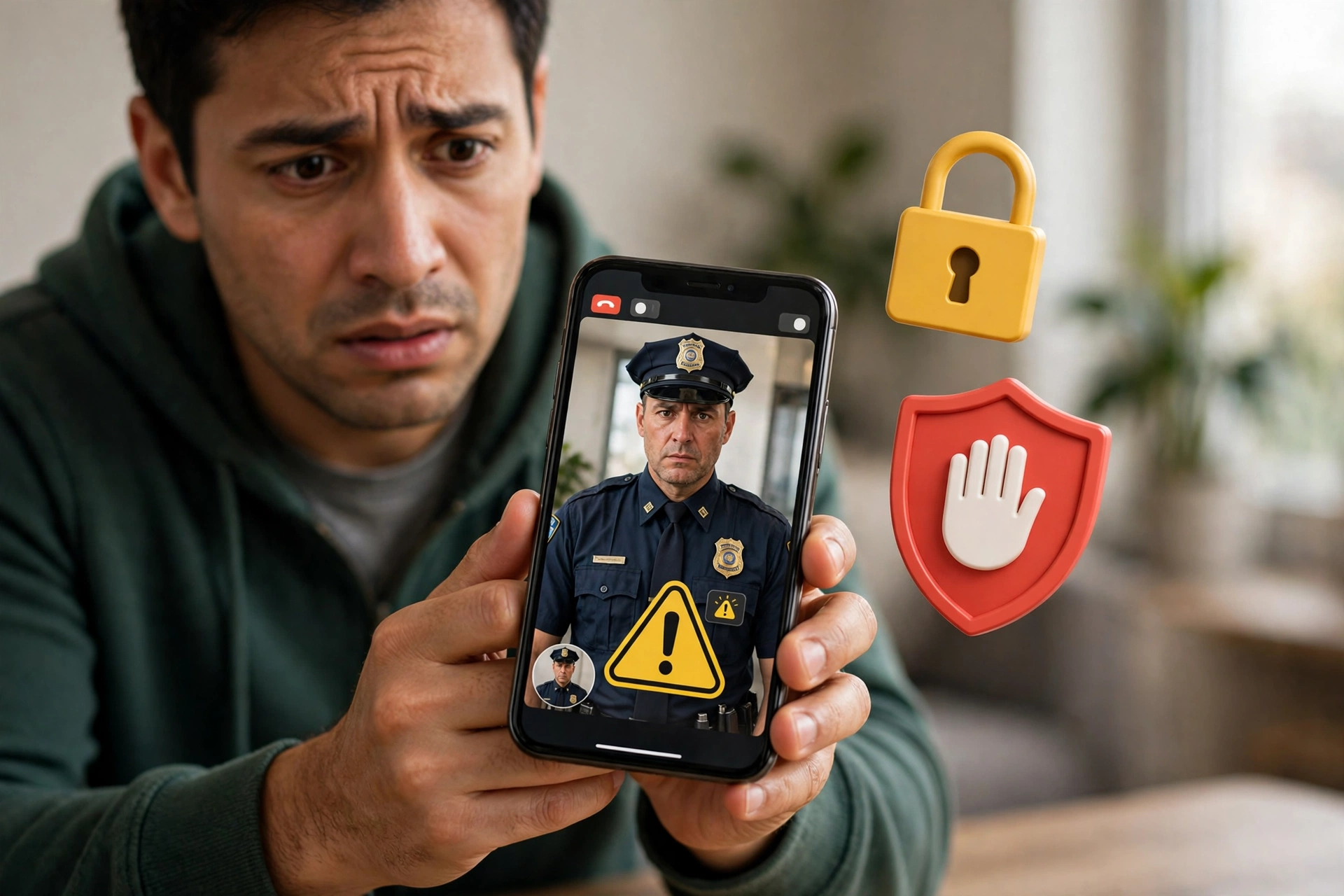
A call comes in, often on video. The caller claims to be from the police, the CBI, customs, or a court. You are told your bank account, Aadhaar number or parcel is linked to a crime, that an arrest warrant has been issued, and that you must stay on the call, transfer money for “verification”, or share your bank details, or you will be arrested within hours. This is a digital arrest scam, and it does not exist in law: no genuine police officer, judge or government agency arrests anyone over a video call, or demands money to cancel an arrest. On 29 October 2026, the Supreme Court of India took up the issue in a suo motu case, meaning a case the court started on its own, and pressed for stronger bank accountability for victims. This guide explains what the court actually said, what it does not yet guarantee, how to spot the scam in the first minute, what to do in the first hour if it happens to you or your family, and how to protect elderly relatives who are often targeted.
What Is a Digital Arrest Scam
A digital arrest scam is a form of cyber fraud in which offenders pretend to be law enforcement officers, investigative agency officials, judges, customs officers, or other government employees, and contact victims by phone or video call. The script usually follows a pattern: a frightening accusation, a fake document or uniform on screen, an instruction to stay isolated and not to tell family, and a demand for money, often framed as a refundable deposit, a verification transfer, a fine, or a way to prove innocence. Victims are sometimes kept on long video calls for hours, told they are under “digital arrest” and under surveillance, and warned that disconnecting will lead to immediate arrest. The scam works not because victims are foolish, but because fear, authority and urgency shut down normal checking. Educated, careful people have fallen for it, a point the Supreme Court bench itself raised during the hearing. If you remember one fact, remember this: a real investigation does not work this way, and no official will ever ask you to transfer money to prove you are innocent.
What the Supreme Court Said on 29 October 2026
A bench comprising Chief Justice of India Surya Kant and Justices Joymalya Bagchi and V Mohana heard the suo motu proceedings on digital arrest scams and cyber enabled financial crimes. The case originated, according to hearing reports, from the case of an elderly couple who allegedly lost Rs 1.05 crore to fraudsters who used fake court documents. During the hearing, the bench said banks must compensate victims of digital arrest and cyber fraud for losses suffered if an investigation establishes that the fraud resulted from a failure of due diligence by the financial institution, and that the compensation must not be less than the amount lost. The bench stressed that the Reserve Bank of India’s proposed regulatory framework must include enforceable provisions on compensation and accountability, not just guidance that banks can treat as optional. The court also noted that victims had lost Rs 800 crore so far this year, even as reported cases had fallen by about 50 per cent, according to figures cited in the hearing. The proposed RBI KYC Amendment Directions, 2026, are expected to be notified by 30 November 2026 and operationalised by 31 December 2026, and the court has expressed its intention to examine the draft framework before finalisation.
What the Court Order Does Not Yet Guarantee
This distinction matters, and honest reporting must keep it clear. The court has directed that the RBI framework must contain enforceable compensation provisions for cases where a bank’s due diligence failure is established. It has not announced that every victim, in every case, will automatically receive full compensation, regardless of the facts. Compensation will still turn on investigation: whether the bank failed in its duties, what the transaction pattern showed, and whether safeguards were followed. Existing compensation provisions for electronic banking fraud have been questioned in the hearing itself, with reports noting an existing provision of up to Rs 25,000 for eligible losses not exceeding Rs 50,000, which the bench treated as inadequate for large digital arrest losses. The direction is therefore a major step toward accountability, not a completed refund scheme. If anyone calls you claiming the Supreme Court has already ordered your money back, and asking for a fee to release it, that is itself a follow up scam. Do not pay it.

Safeguards the Court Wants Banks to Build
Beyond compensation, the bench pressed for prevention, with a clear message reported from the hearing: a report after the money is gone is only a post-mortem, and the system must be concerned with prevention. The safeguards suggested include banks temporarily suspending transactions that are inconsistent with a customer’s established banking pattern, automatically reporting suspicious activity, and undertaking physical verification where necessary. Banks should classify accounts according to their nature and transaction history, use artificial intelligence to identify unusual transfers, and, for high value or suspicious transactions, alert the nearest police station so verification can happen before funds move. The bench also flagged mule accounts, accounts used to move and hide stolen money, and directed state and Union Territory law enforcement agencies to submit reports on FIRs, investigations and preventive measures. WhatsApp told the court it had acted against 9,400 accounts and would file an affidavit detailing its preventive measures, and the court also discussed whether prolonged video calls associated with digital arrest scams could be interrupted through technical safeguards. Attorney General R Venkataramani told the court the RBI was examining banking liability, including personal liability and criminal prosecution of employees involved in fraud. Taken together, the hearing points to a system where unusual, out of pattern transfers are paused and checked, rather than waved through and investigated afterwards.
Red Flags: Spot a Digital Arrest Scam in the First Minute
Use this checklist the moment a call turns frightening. Any one of these is enough to hang up and check independently.
- The caller claims you are under digital arrest, or that police are watching you through your phone.
- You are told not to disconnect, not to tell family, or not to visit a police station or bank in person.
- You are shown a fake arrest warrant, court order, police ID or uniform on a video call.
- You are asked to transfer money for verification, security, a refundable deposit, or to prove innocence.
- You are asked for OTPs, net banking passwords, UPI PINs, or remote access to your phone or computer.
- The caller pressures you with a deadline of minutes or hours, and threatens immediate arrest.
- The caller asks you to move money to a “safe account”, buy gift cards, or convert money to crypto.
- The call comes from an unknown number, or a number that does not match the official number of the agency claimed.
Genuine agencies do not operate this way. They do not conduct arrests over video calls, they do not collect fines or deposits over the phone, and they do not ask for OTPs or passwords. If a call hits even one red flag, end it. You can always verify a real matter through official channels afterwards, and a real official will not punish you for hanging up on a scammer.
What to Do in the First Hour
Speed matters, because stolen money moves quickly through mule accounts. Work through these steps in order, and ask a family member to help if you feel shaken.
- Hang up immediately. Do not argue with the caller, and do not stay on the call to “prove” anything.
- Do not transfer any money, share any OTP or password, or install any app the caller suggested. If you already installed an app, uninstall it and restart your phone.
- Call your bank at once, on its official number, and ask it to freeze or block the affected account, card or UPI access, and to place a hold on any recent transaction if possible. Note the complaint reference number, the time of your call, and the name of the person you spoke to.
- Report the fraud to the National Cybercrime Helpline at 1930, and file a complaint on the National Cybercrime Reporting Portal, following the official process there. Keep screenshots of the caller number, messages, fake documents, transaction details and call times.
- Visit your nearest police station or cyber cell if asked to do so, and file a written complaint, keeping a copy and the FIR or acknowledgement number.
- Write to your bank in a formal complaint, attaching your evidence, and ask for an investigation into the transaction pattern and any due diligence failure. Keep copies of everything you send.
- Tell a trusted family member at once, even if the caller told you not to. Isolation is part of the scam, and a second person thinking clearly is your best protection.
- Watch for follow up scams. Fraudsters often call victims again, posing as police, bank recovery agents, or lawyers, and ask for a fee to return the stolen money. Do not pay any such fee.
This is general information, not legal advice. For a large loss, or if your bank rejects your complaint, consider speaking to a lawyer about your options, including the bank’s grievance process and the banking ombudsman route, and keep every document from the start.
How to Protect Elderly Family Members
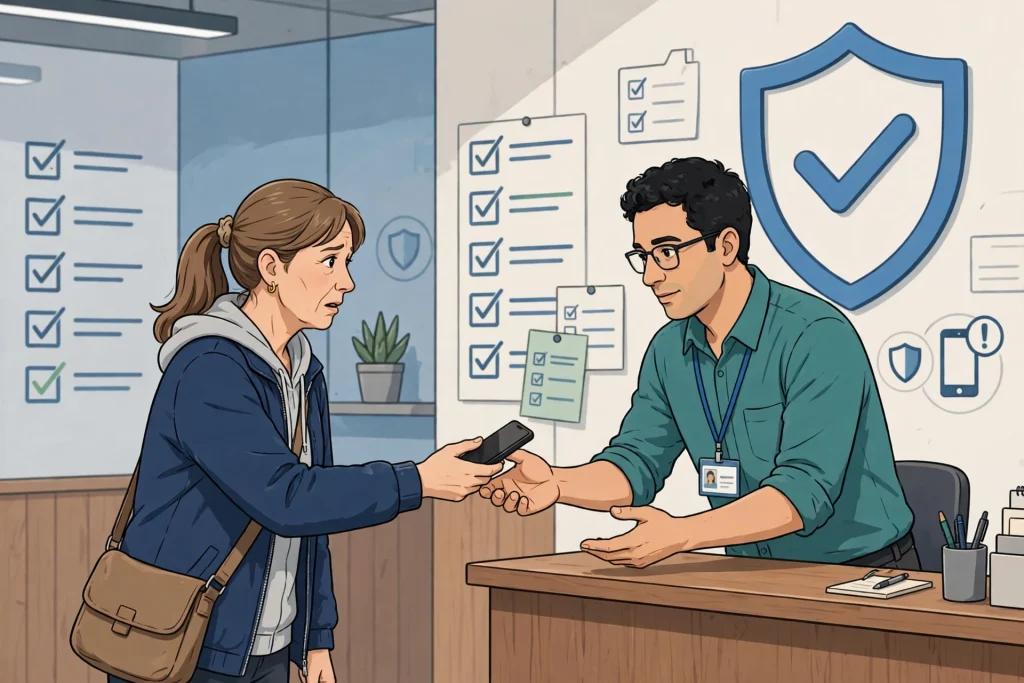
Elderly people are frequent targets, because scammers exploit respect for authority, unfamiliarity with digital banking, and the fear of bringing shame on the family. A few family habits help more than any app. Agree on a family code word, so that a genuine emergency call from a relative can be verified in seconds, and scammers who do not know it are exposed at once. Tell elderly parents and grandparents, clearly and without embarrassment, that no police officer will ever arrest them over a video call, and that they should hang up and call you first, no matter what the caller threatens. Set sensible transaction limits on accounts used for daily spending, turn on transaction alerts for every family member who can receive them, and review statements together regularly. If an elderly relative lives alone, make sure they have the bank’s official number and the 1930 helpline number written down by the phone, not just saved in it, so they can act even if they are flustered. Most importantly, respond with support, not blame, if a scam succeeds. Shame keeps victims silent, and silence is what lets the same scammers try again.
Common Myths About Digital Arrest Scams
Myth: Only uneducated or careless people fall for these scams. Fact: the Supreme Court bench itself questioned why educated people continue to fall victim, and the answer is fear and authority, not intelligence. Scammers rehearse scripts, use fake documents and uniforms, and keep victims isolated for hours.
Myth: If the caller shows a warrant on video, it must be real. Fact: fake warrants, IDs and uniforms are easy to display on a screen, and a document shown on a call proves nothing. Verify through official channels, in person, if you have any doubt.
Myth: Transferring money to a safe account protects it. Fact: there is no official safe account for victims to transfer money into. Any such instruction is the scam itself.
Myth: The bank will automatically refund you because the court said so. Fact: the court has directed that the RBI framework must include enforceable compensation where due diligence failure is established. It is not yet an automatic refund for every case, so document your complaint carefully and follow the process.
Myth: Hanging up will make things worse. Fact: hanging up is the safest first step. A genuine agency will contact you through proper, verifiable channels if there is a real matter, and it will not punish you for ending a suspicious call.
Frequently Asked Questions
What is a digital arrest scam?
It is a cyber fraud in which criminals pretend to be police, CBI, customs, court or other government officials on a phone or video call, claim you are linked to a crime, and pressure you to transfer money or share bank details under threat of immediate arrest. No genuine agency arrests anyone this way.
Has the Supreme Court ordered banks to pay full compensation to all digital arrest victims?
Not automatically for every case. The bench said banks must compensate victims for the full amount lost if an investigation establishes that the fraud resulted from a failure of due diligence by the financial institution, and that the RBI framework must include enforceable compensation provisions. The framework is expected to be notified by 30 November 2026 and operationalised by 31 December 2026.
What should I do first if I get a digital arrest call?
Hang up immediately, do not transfer money or share OTPs or passwords, and then call your bank on its official number and report the fraud to the National Cybercrime Helpline at 1930. Tell a trusted family member at once.
Can police arrest me over a video call?
No. Police do not conduct arrests over video calls, do not demand money to cancel an arrest, and do not ask for OTPs, net banking passwords or UPI PINs. Any call claiming otherwise is a scam.
What evidence should I keep after a digital arrest fraud?
Keep screenshots of the caller number, messages and any fake documents shown, the times and duration of calls, transaction details and statements, your bank complaint reference number, and copies of your police complaint and FIR or acknowledgement.
How can I protect my elderly parents from digital arrest scams?
Agree on a family code word, tell them plainly that no officer will arrest them over a video call, ask them to hang up and call you first, set sensible transaction limits and alerts, keep official bank and 1930 numbers written down by the phone, and respond with support, not blame, if anything goes wrong.
Conclusion
Digital arrest scams succeed because they combine fear, fake authority and urgency, and they keep victims isolated at exactly the moment they most need a second opinion. The Supreme Court’s 29 October 2026 hearing is an important push in the right direction: banks must build prevention into their systems, pause out of pattern transactions, verify before money moves, and compensate victims in full where their own due diligence failed. But a court direction is not a shield you can rely on alone. Your first line of defence is simpler and immediate: hang up, do not transfer money, call your bank and 1930, tell your family, and keep every piece of evidence. Share this guide with the people most likely to be targeted, especially elderly relatives, because the call that fails on you may succeed on someone you love. For more everyday safety and lifestyle guidance, see our tips on how to grow safely on Instagram in India, home fitness habits for busy Indians and our winter skin care routine guide for India.

3 Comments
Pingback: New Rules From 1 November 2026 in India: CNAP, FASTag, LPG and GST Changes
Pingback: Jeevan Praman Patra 2026: Life Certificate Last Date and Face Authentication Guide
Pingback: How to Save Money from Salary in India 2026: Monthly Budget Guide